Did you know that only 20% of seeds used by African smallholders are formal sector certified? This surprising reality, cited by the International Seed Federation, raises a fundamental question: Are Africa’s seed certification laws fostering a flourishing seed sector—or holding back the very smallholder farmers who form its backbone?
A Startling Landscape: Facts and Figures on Seed Laws in Africa
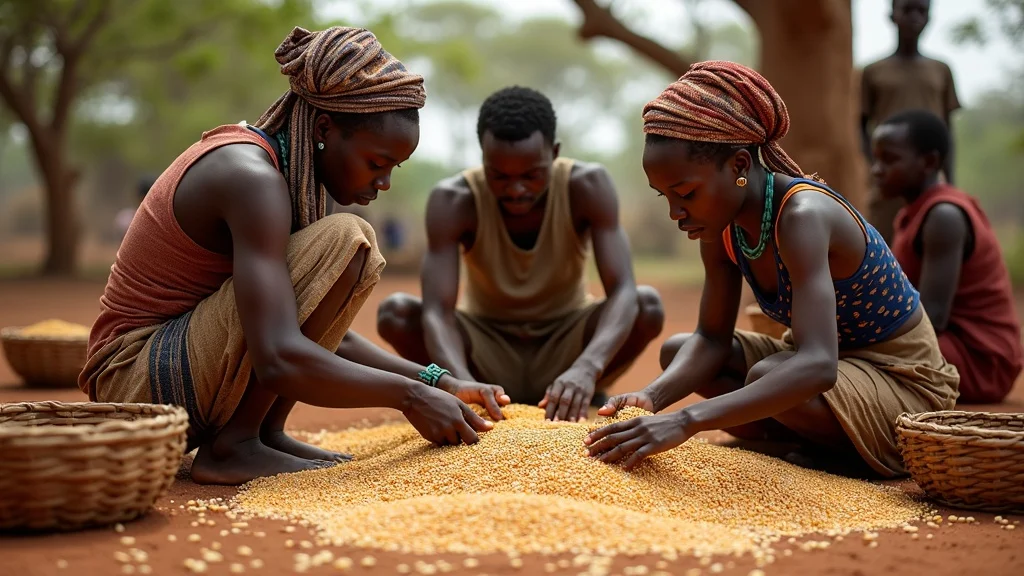
In Africa, seed certification laws have profoundly shaped the agricultural landscape and food systems. While regulators highlight these laws as central to quality seed assurance and crop improvement across African countries, the numbers tell a more complicated story. According to the International Seed Federation, over 80% of seeds planted by African smallholder farmers come from informal and saved seed systems, not through the rigorous formal certification process. This disparity suggests that the reach of seed certification laws remains limited for most rural agricultural stakeholders.
“Did you know only 20% of seeds used by African smallholders are formal sector certified?” – International Seed Federation
The gap exists for various reasons. Many smallholder farmers continue to rely on traditional knowledge, farmer-saved seed, and local crop species for resilience and adaptability. Yet, as seed laws have evolved—ostensibly to ensure seed quality, plant variety protection, and harmonization—concerns rise around food security, the future of indigenous seeds, and the risk of marginalizing millions of small-scale producers from the broader food system.
What You’ll Learn About Seed Certification Laws Africa
-
How seed certification laws africa shape food security and agricultural livelihoods
-
The relationship between seed laws and smallholder innovation
-
Perspectives from plant breeders, policymakers, and farmers
-
Critical insight into regulatory impacts on the seed sector
Seed Certification Laws Africa: Historical Evolution and Current Landscape
How Seed Laws Have Developed Across African Nations
The evolution of seed certification laws Africa is intertwined with evolving national and regional seed policy frameworks. Many laws were first established post-independence, often modeled on former colonial regimes. Over decades, governments introduced updates to require seed registration, certification, and quality control, drawing on global trends to protect the integrity of food systems and promote food security. However, in contrast to large scale, mechanized agriculture found in developed countries, African nations’ policies tend to oscillate between enforcing strict formal sector standards and allowing room for local, farmer-driven seed systems.
Today, seed law reform is a collaborative effort involving ministries of agriculture, plant breeders, regional economic communities, and international organizations. Policies such as variety release protocols and intellectual property rules (e. g. , the African Regional Intellectual Property Organization) strive to balance commercial seed sector interests with the pressing needs of diverse smallholder farmers. Despite this, local realities—resource constraints, geography, and prevailing agricultural traditions—continue to hinder full alignment with international best practices and standards.
Key Differences in Seed Certification Laws Africa Compared to Global Best Practices
Distinct from global approaches, seed laws in Africa often present more stringent barriers for smallholder participation in the formal seed market. Where European or North American models incorporate multiple tiers of certification or participatory quality systems, African regimes often require centralized, costly testing and paperwork. For instance, variety release and registration fees can price out smaller plant breeders and independent seed enterprises, inadvertently favoring larger, multinational commercial seed companies or public institutes.
Another key difference revolves around recognition of farmer-saved seed and indigenous plant varieties. In many African countries, these local seeds constitute a critical buffer against climate change and pests, yet strict certification requirements can jeopardize traditional and community-based seed systems. Contrasted with global best practices, where community seed banks and participatory plant breeders play a substantial role in seed production, African laws at the national level risk marginalizing the very innovations that sustain rural food systems.

Seed Sector Reform: Intentions Versus Outcomes in Seed Laws
Objectives of Seed Law Reform: Who Decides?
Seed sector reform in Africa often aims to ensure seed quality, stimulate agricultural productivity, and foster economic development by standardizing certification and trade. Typically, the objectives come from a mix of national policy priorities, advice from international bodies, and lobbying by the commercial seed market. Policymakers argue that improved seed systems, with robust certification processes, catalyze investment and variety release, drawing in plant breeders seeking market share.
“Seed laws should empower, not marginalize, smallholder farmers.” – African Agricultural Thought Leader
Yet, while well-meaning, these reforms sometimes miss the day-to-day realities of the majority—smallholders working at the grassroots. Critics argue that top-down seed policy disproportionately empowers commercial entities and global intellectual property organizations over community farmers and indigenous seed keepers. The result: a tension between the stated intention of universal quality seed access and outcomes that skew heavily toward large-scale commercial production and away from traditional seed autonomy.
Seed Certification Laws Africa and Smallholder Farmers: Access, Barriers, and Realities
-
Cost and complexity of compliance for smallholders
-
Impact on traditional and farmer-saved seed systems
-
Seed production constraints for emerging plant breeders
For smallholder farmers across Africa, seed certification laws present a double-edged sword. On the one hand, access to certified, high-quality seed theoretically boosts yields and disease resistance. On the other, the certification process—often involving lengthy paperwork, variety trials, and high fees—creates significant hurdles. Many smallholders cannot afford registration costs or comply with technical requirements defined for large-scale producers, thus excluding themselves from the formal seed sector.
This exclusion has major implications for food production and food security. Farmer-saved seed—the bedrock of many African food systems—often falls outside legal recognition, undermining the diversity and resilience that local crop species provide in the face of climate change and market shocks. At the same time, stringent rules on seed production hamper the emergence of new, locally-adapted plant varieties developed by smallholder and community plant breeders, ultimately narrowing the genetic base essential for robust food systems.

Seed Production and the Role of Plant Breeders Under Strict Seed Laws
How Plant Breeders Adapt to Seed Certification Laws Africa
African plant breeders face mounting challenges under strict seed certification laws Africa. The certification process often favors established commercial seed producers with resources to navigate formal requirements. While some public research institutes succeed in registering new plant varieties, independent and small-scale breeders complain of cumbersome regulatory hoops and lack of financial support, which slows innovation and reduces variety diversity in the certified seed market.
Despite these difficulties, some plant breeders are adapting by forming cooperatives and alliances, pooling resources to meet the demands of national seed production certification agencies. Collaboration with regional economic organizations, such as the African Seed and Biotechnology Programme, also provides a platform for coordinated testing, mutual recognition of variety release, and advocacy for more inclusive seed law reform. Still, for many visionary breeders hoping to introduce climate-resilient or locally-valued crop species, the path remains fraught with regulatory and logistical barriers.
Implications for Local Seed Production and Biodiversity
Strict seed laws in Africa can trigger unintended consequences for local seed production and biodiversity. With certification processes favoring hybrid seeds and uniform plant varieties, traditional and farmer-developed seeds—including indigenous seeds with local adaptation traits—become marginal in the formal seed system. This undermines the ecological and nutritional diversity that has long underpinned African food systems, especially as agricultural landscapes face the stresses of changing climate and pest outbreaks.
Moreover, narrow regulatory focus on commercial seed production squeezes out community-level producers and participatory plant breeders, discouraging experimentation and the maintenance of rare crop species. To counter these pressures, advocates call for reformed certification standards that recognize local knowledge, encourage diverse seed systems, and protect the rich agro-biodiversity vital for long-term food security.

Climate Change Meets Seed Certification Laws Africa
Do Seed Laws Enable Climate-Resilient Agriculture?
The intersection of climate change and seed certification laws Africa is increasingly urgent. With erratic rainfall, rising temperatures, and the spread of invasive pests, African farmers need rapid access to climate-resilient plant varieties. However, the slow and costly variety release and certification process often delays the introduction of vital new crops. While some seed laws allow for accelerated paths in emergencies, many smallholder and local breeders are unable to meet strict data and documentation requirements, limiting their ability to respond dynamically to climate threats.
Leading experts argue that a modern seed system must be nimble, supporting both innovation and the rapid dissemination of adaptive seeds. Countries embracing participatory certification, farmer-led trials, and decentralized variety testing are showing promise—ensuring seed laws evolve to meet the climate change challenge while still protecting quality and authenticity in the seed sector.
Case Studies: Seed Sector Innovation in Climate-Stressed Regions
Several African countries are piloting innovative seed production projects that balance regulatory rigor with flexibility to address climate change challenges. In Ethiopia, for instance, farmer-researcher partnerships have led to faster variety release for drought-tolerant crops, integrating traditional knowledge into the certification process. Meanwhile, the West African Seed Committee is developing regionally harmonized frameworks that reduce duplicative testing and promote cross-border dissemination of climate-resilient seeds.
These examples demonstrate the power of collaborative seed law reform, where plant breeders, smallholder farmers, and policymakers create more resilient, inclusive seed systems. By recognizing the value of indigenous seed and integrating local input at every stage of regulation, Africa can build food systems better equipped for environmental turbulence.
People Also Ask: Seed Certification Laws Africa in Practice
What is the seed law in Kenya?
Answer: Overview and Critique of Kenya’s Seed Law Implementation
Kenya’s seed law—anchored by the Seeds and Plant Varieties Act—regulates variety registration, intellectual property, and the certification process for both commercial and smallholder farmers. Implementation focuses on ensuring seed quality through official testing and approval. Critically, while the law aims to support seed production and food security, in practice it faces critique for high compliance costs, limited support for farmer-saved seed, and perceived favoritism toward large commercial breeders. Proponents of reform call for greater inclusivity and streamlined procedures so that local innovation is not stifled by bureaucracy.
What are the requirements for seed certification?
Answer: Procedures and Challenges for Smallholder Farmers
To achieve seed certification in much of Africa, applicants must provide genetic purity data, undergo field inspections, and pass rigorous laboratory quality tests. While these measures aim to ensure quality seed and protect national food systems, they often pose challenges for smallholder farmers, who may lack the technical skills, documentation, and financial resources to comply. As a result, most small farm operations remain outside the certification framework, relying instead on informal, farmer-saved seed. Calls for reform emphasize the need for tailored certification schemes suited to community-level seed production.
What is the African seed program?
Answer: Regional Harmonization Efforts and Their Impact
The African seed program refers to cross-country collaboration, such as the African Seed and Biotechnology Programme, focused on harmonizing seed laws, boosting seed market integration, and supporting regional food security. By promoting mutual recognition of seed certification and variety release, these initiatives reduce trade barriers and foster innovation. However, critics warn that harmonization efforts must include diverse farmer voices and safeguard local seed systems to avoid a blanket “one-size-fits-all” approach that can undermine indigenous biodiversity and smallholder resilience.
What is the Zimbabwe seed Act?
Answer: Zimbabwe’s Current Regulatory Framework in the Seed Sector
Zimbabwe regulates its seed market under the Seed Act, which sets standards for seed production, testing, and certification. The Act aims to ensure only quality seed is commercialized, but has been criticized for placing heavy regulatory burdens on local and emerging plant breeders. Recent discussions center on streamlining certification, relaxing restrictions on farmer-saved seed, and adopting a more practical, inclusive approach—one that balances food security with the protection of local crop species and farmer innovation.

Policy, Advocacy, and Alternatives: Are There Better Ways Forward for Seed Laws?
Community-Led Seed Production Initiatives
Across Africa, community-driven seed projects are redefining what a resilient, farmer-centered seed system could look like. By establishing local seed banks, farmer field schools, and participatory plant breeding networks, these initiatives reclaim the power to select, adapt, and share seed varieties best matched to specific environmental and cultural contexts. Such grassroots action has proven effective in conserving indigenous seeds, fostering biodiversity, and bypassing some of the barriers imposed by official certification processes.
These initiatives often receive support from NGOs and international development partners keen to protect agro-biodiversity and food sovereignty. Advocates point out that community-led seed production can complement formal seed sectors, providing a vital safety net and source of innovation in regions threatened by climate shocks and market instability.
Balancing Regulation and Farmer Innovation
For Africa’s seed sector to truly thrive, a balanced approach is needed—one in which seed certification laws recognize both the legitimate goals of quality assurance and the realities of smallholder-driven agriculture. Forward-looking policymakers are piloting flexible certification pathways, participatory varietal selection, and farmer-inclusive advisory boards to ensure regulations uplift rather than impede local innovation.
Success stories abound: in Senegal, farmer-led seed associations have helped shape more inclusive national seed policies, while Rwanda’s reforms are integrating smallholder feedback to streamline certification and lower costs. Policy recommendations consistently highlight the need for technology transfer, capacity-building for plant breeders, and legal frameworks that protect both intellectual property and indigenous community rights.
-
Advocacy success stories
-
Policy recommendations for inclusive seed sector reform
Comparative Table: Seed Laws, Certification Mechanisms, and Outcomes in Select African Countries
|
Country |
Main Seed Law |
Certification Mechanism |
Smallholder Inclusion |
Notable Outcomes |
|---|---|---|---|---|
|
Kenya |
Seeds and Plant Varieties Act |
Central authority certification, strict registration |
Limited, high compliance cost |
Strong commercial sector, smallholder exclusion |
|
Ethiopia |
Seed Proclamation No. 782/2013 |
Decentralized, participatory in some areas |
Growing, via farmer co-ops |
Diversified seed sector, improved resilience |
|
Zimbabwe |
Seed Act (Chapter 19:13) |
Central authority, rigid inspection |
Minimal, reform debates ongoing |
Certified sector slow-growing, informal sector dominates |
|
Senegal |
Law No. 94-81 |
Central certification, pilot participatory testing |
Improving, supported by farmer unions |
Greater smallholder input, ongoing policy changes |
FAQs on Seed Certification Laws Africa and the Seed Sector
-
How do seed laws differ for indigenous seed varieties?
Seed laws in Africa typically focus on commercial and uniform plant varieties, often overlooking indigenous seeds and their unique adaptation traits. This can lead to decreased biodiversity and less resilient food systems, as legal recognition and support for traditional varieties lag behind global best practices. Advocates seek reforms that protect and promote indigenous seeds within national certification frameworks. -
Can smallholder farmers participate in official seed production schemes?
While technically possible, participation is rare due to the high costs, complex procedures, and technical documentation required by most official certification schemes. Some countries are exploring more accessible, farmer-led certification processes or simplified quality declared seed (QDS) pathways to increase smallholder inclusion. -
What is the role of international organizations in shaping seed certification laws Africa?
International organizations play a significant role by offering technical assistance, funding, and policy guidelines for harmonizing seed certification across regions. However, their influence can sometimes overshadow local realities, making it essential that reforms are adapted to African countries’ unique agricultural, social, and climatic conditions.
Key Takeaways: The Real Impact of Seed Certification Laws Africa on the Seed Sector
-
Seed certification laws Africa often prioritize commercial seed sector over local knowledge
-
Barriers to entry may undermine smallholder resilience and biodiversity
-
Reform must integrate farmer voices and practical realities
Final Thoughts: Rethinking Seed Certification Laws Africa For A Sustainable Seed Sector
“Inclusive seed laws are the foundation of resilient African agriculture.” – Policy Expert
Only bold, inclusive reform—guided by the needs of smallholder farmers, plant breeders, and the realities of climate change—can ensure that seed certification laws in Africa cultivate stronger, more equitable food systems.
Take Action: Support Fair and Inclusive Seed Certification Laws Africa
Now is the time to advocate for more inclusive, locally-driven seed policies. Support organizations and initiatives that empower community seed banks, promote farmer voices, and push for balanced reforms. The future of Africa’s food systems depends on it.