In Andhra Pradesh, India, autonomous credit models cut average farm loan approval times from 23 days to less than 48 hours for 12,000 smallholders in a single season (World Bank Digital Agriculture Pilot, 2025). This rapid acceleration, powered by agentic AI farm loans 2026, exposes not only a leap in operational efficiency but also the need for deep institutional and infrastructural change. As adoption accelerates across agricultural lenders and service agencies, the central question shifts: What structural evidence and operational clarity does implementation actually require?
Farm Loan Approval in 48 Hours: Unpacking the Structural Shift (farm bill, agricultural lenders, farm financial)
The movement from manual farm financing—where approvals can stretch to 45 days or longer—to AI-driven 48-hour turnarounds signals a fundamental reorganization of agricultural credit. Median approval times remain 14–45 days in Kenya, India, and Brazil (CGAP, 2024), despite rising digitalization attempts. Emerging agentic AI farm loans 2026 claim to collapse this cycle without increasing default risk or operational cost. For reference, digital credit scoring adoption among agricultural lenders hit 37% in sub-Saharan Africa last year (IFAD, 2023), yet few platforms have demonstrated both speed and financial inclusion at scale in the farm financial context.
Yet, beneath the promise, cost-per-beneficiary metrics reveal important nuances. Manual loan processes average $23 per applicant, while public agentic AI pilots reduce this to $2. 70 (World Bank Digital Agriculture, 2025). Private platforms demonstrate even faster decisions, sometimes in as little as 24 hours, but often at twice the cost. Such figures illustrate a stark gap between pilot-stage efficiency and the realities of scaled, regulated agricultural lending under the farm bill frameworks common in the United States and beyond.
“In pilot regions of Andhra Pradesh, autonomous AI credit models cut loan application processing time from 23 days to under 48 hours, reaching 12,000 farmers by Q4 2025 (World Bank Digital Agriculture Pilot, 2025).”

- Current median farm loan approval times in Kenya, India, and Brazil: 14–45 days (CGAP, 2024)
- Adoption rates of digital credit scoring by agricultural lenders: 37% in sub-Saharan Africa (IFAD, 2023)
- Differences in cost-per-beneficiary for agentic AI farm loans 2026 vs. manual processes: Manual—$23, Public AI pilot—$2.70, Private AI—$5.20
Examining the Scope: House Agriculture Committee Reports on Loan Digitization
The House Agriculture Committee’s 2024 review spotlights the necessary legislative flex for supporting farm bill modernization. These reports emphasize that multi-ministerial cooperation, standardized digital frameworks, and data portability regulations are preconditions for scaling agentic AI farm loans 2026 beyond pilot regions. Without legislative interventions, digital bottlenecks and service agency fragmentation risk stalling what could otherwise be an inclusive farm financial revolution.
Congressional briefings have highlighted specific recommendations: standardized digital onboarding, shared digital identification across service providers, and minimum requirements for real-time audit trails. Early evidence shows results are heavily contingent on whether regional farm service agencies can securely share records for AI models, as well as the legal foundation established by recent farm bill revisions.
Structural Barriers: Farm Bill Implementation Complexity
While the accelerated approval timelines of agentic AI farm loans 2026 mark a significant step forward, structural barriers persist. Primary among these are inconsistencies in how farm bill mandates are executed at the service agency level. Many agricultural lenders report operational friction due to non-interoperable systems, varying digital identity standards, or incomplete farm service data.
Furthermore, uneven broadband connectivity and blurred regulatory oversight—especially across house agriculture committee jurisdictions—can yield inequitable access or inconsistent compliance. Long-term scaling will require synchronizing agency IT protocols, digitized workflow processes, and grievance redress procedures—not merely technological innovation.

How Agentic AI Farm Loans 2026 Operate: Data Streams, Algorithms & Accountability (agricultural lenders, risk management, farm service, service agency)
The operational engine of agentic AI farm loans 2026 blends high-frequency digital data, algorithmic credit scoring, and embedded oversight. At its core, these systems ingest satellite imagery, digital ID credentials, and granular field service records often collected through farm service agencies. The real advance: these data are processed and cross-verified in near-real time, supporting rapid farm financial profiling and transparent risk assessment for agricultural lenders.
Importantly, risk management is shifting away from static, document-based scoring to dynamic, performance-triggered algorithms. With new inputs—like verified seasonal yield, input cost data, and real-time farm service updates—agentic AI models align credit with actual farming operation cycles. But this efficiency only stands if accountability is engineered from the start: automated systems must be auditable, with service agencies retaining a central oversight and grievance redressal function.
Data Inputs: Satellite Imagery, Digital ID, and Farm Service Records
Modern agentic AI farm loans 2026 rely on layered data: at minimum, 24 months of historic yield records, digital mobile ID, and recent satellite imagery tied to parcel-level farm boundaries (IFC pilots, 2024). These inputs, streamed via secure APIs, feed real-time credit decisions—drastically reducing input error and manual document bottlenecks. Interoperability with service agency data ecosystems is non-negotiable, as is the ability to aggregate cash flow and crop insurance status for transparent risk modeling.
Incomplete field or digital ID data, however, remains a primary driver of exclusion. Smallholders lacking digital records face up to 8% exclusion error rates in AI screening compared to manual processes (CGIAR, 2023). Implementation must therefore prioritize data completeness initiatives, local language support, and user-friendly mobile onboarding—ensuring no farming operation is left behind in the new digital farm financial landscape.

Credit Algorithms: Risk Management beyond Conventional Scoring
Traditional farm loan approvals lean on rigid scorecards, often missing dynamic variables like seasonal cash flow, specialty crop cycles, or precision ag adoption. Agentic AI farm loans 2026 recalibrate this, integrating time-series satellite analysis and granular farm income histories—providing important real-time insights for agricultural lending. These algorithms trigger early warnings if repayment schedules or capital investment patterns deviate from modeled norms, giving agricultural lenders new tools for risk management.
However, digital bias and error propagation loom as new pitfalls. Risk management frameworks must feature constant model validation, rule-based overrides by service agency officers, and transparent reporting of edge case exclusions. This is not just a technical concern but a core regulatory requirement—underscoring the ongoing relevance of the house ag committee and local oversight bodies.
Ensuring Accountability: The Role of Service Agency and Regulatory Oversight
Regulatory clarity is vital for accountability within agentic AI farm loans 2026. Service agencies’ traditional screening shifts to real-time monitoring of AI decisions and redressal channels. Each automated loan action is logged, forming an auditable trail accessible to national regulators, agricultural lenders, and the affected farmer. Oversight boards—such as those championed by the house agriculture committee—play an escalated role in adjudicating adverse outcomes and systemic data exclusions.
Without such frameworks, rapid digital credit can displace risk rather than manage it, as subsidy and guarantee schemes become vulnerable to poorly-audited AI decision cycles. Therefore, multi-institutional oversight and embedded digital safeguards are preconditions—not afterthoughts—for long-term viability of agentic AI farm loans 2026.
“Automated credit scoring is only as inclusive as the datasets it ingests—current exclusion error rates reach 8% among smallholders with incomplete digital records (CGIAR, 2023).”
Comparing Implementation Models: Public vs. Private Agentic AI for Farm Loans (farm bill, farm service agency)
Implementation models for agentic AI farm loans 2026 currently fall into two archetypes: public pilots managed by farm service agencies and private sector platforms engaging directly with agricultural lenders. Each offers distinct cost, reach, and efficiency markers. Public programs—like the India FSA pilot—deliver broad access, local service alignment, and lower beneficiary cost at $2. 70 per user. In contrast, private digital credit outfits, such as AgriCredit+ (IFC Report, 2024), approve loans faster but serve fewer farmers at nearly double the cost.
The manual baseline remains the most expensive and slowest, resulting in higher exclusion and lower systemic transparency. Evidence underscores that blended models—where public and private entities cooperate, leveraging shared digital infrastructure and compliance frameworks—yield the best outcomes for farm income security and operational risk distribution.
| Model | Reach (Beneficiaries, 2025) | Cost per Beneficiary (USD) | Approval Time | Evidence Source |
|---|---|---|---|---|
| Public Pilot (India FSA) | 12,000 | $2.70 | 48 hours | World Bank Digital Agriculture, 2025 |
| Private Platform (AgriCredit+) | 8,500 | $5.20 | 24 hours | IFC Report, 2024 |
| Manual Processing (Baseline) | N/A | $23.00 | 14–45 days | CGAP, 2024 |
Farm Service Agency Role in Scaling Operations
Farm service agencies anchor operational trust in digital lending ecosystems. Their capacity to onboard, verify, and resolve farmer issues directly determines whether agentic AI farm loans 2026 reach marginalized growers. These public agencies act as both technology facilitators—integrating farm financial records with digital ID—and as human bridges for digital literacy or grievance redress (World Bank, 2025).
Field evidence stresses that service agency staff must be trained in both the digital systems and in non-digital fallback protocols. Perhaps most importantly, their capacity to escalate technical or legal cases remains central as agentic AI models mature and regulatory standards evolve.

Comparing Outcomes: Loan Default Rates and Farmer Satisfaction
Preliminary comparisons reveal that public agentic AI pilots maintain repayment rates near those of manual programs—despite much larger volumes—when paired with ongoing risk management (IFC, 2025). Private platforms have posted slightly faster approval times, but with greater variance in farmer satisfaction and documented anecdotal issues around exclusion due to unfamiliar onboarding protocols or data requirements.
Satisfaction surveys indicate that digital-only rollout without agency mediation reduces accessibility among low-literacy and first-time borrowers. However, when trilingual support and service agency interaction are baked in, not only do loan approval volumes increase, but positive ratings from women and smallholder farmers double compared to vendor-led deployments.

Stakeholder Perspectives: Agricultural Lenders, House Ag, and Risk Management Concerns (house ag, agricultural lenders, risk management)
Agricultural lenders and house ag committee representatives alike recognize both the operational promise and real risks associated with agentic AI farm loans 2026. Lenders value speed and lowered labor costs but warn against unproven risk management in the absence of deep-trained, local data. House agriculture committees have called out the criticality of embedded audit systems and sanction powers for regulators, noting that “speed without rigorous risk management might simply shift financial risk from banks to public guarantee schemes” (FAO Finance Brief, 2024).
Similarly, risk management teams within lending banks now emphasize the importance of dynamic monitoring tools, not static rules. The shift to automation means errors can propagate at scale—a reality that only robust oversight and skilled escalation pathways can counterbalance. In response, credible farm loan platforms are developing new workflows to ensure agricultural lenders, the house agriculture committee, and local service agencies move in lockstep to manage farm bill compliance and ongoing program equity.
“Speed without rigorous risk management mechanisms might simply shift financial risk from banks to public guarantee schemes (FAO Finance Brief, 2024).”
Agricultural Lenders: Balancing Efficiency and Oversight
For agricultural lenders, the principal tradeoff is clear: agentic AI farm loans 2026 can slash operational costs and widen loan portfolios almost overnight—yet only if robust oversight structures and staff retraining accompany this shift. Many institutions now maintain hybrid teams: AI-driven initial screening paired with senior risk management officers for manual reviews, especially for edge cases or high-value capital investments.
The transition also brings a new focus on digital cash flow tracking, input cost fluctuation, and the ability to adjust interest rates in real time. In markets where lending is closely linked to the farm bill and United States regulatory standards, this new data-driven oversight is fast becoming an operational necessity rather than an optional upgrade.
House Ag Committees on Regulatory Gaps in AI-Powered Farm Finance
House agriculture committees are actively working to close gaps left by legacy farm bill language. Most notably, a 2024 review called for clearer cross-ministry coordination, minimum digital credit standards, and harmonized compliance reporting across platforms.
These committee reviews have resulted in a wave of new pilot audits, legislative workshops, and policy notes focused squarely on the operational realities—not simply the supposed promise—of agentic AI farm loans 2026. The result: scaling and funding can be withheld if platforms fail to demonstrate regulatory alignment, real-time grievance logging, or transparent risk reporting.

Farmer Trust and Viability: Surveys and Field Testimonies
- Rise in expedited farm financial approvals: Farmers report more predictable cash flow for input purchases and crop planning cycles.
- Reported risk management gaps: Some smallholder groups note that digital-only processes can under-serve those without prior bank accounts or mobile phones, but this is mitigated when farm service agencies maintain an in-person presence.
Direct surveys and focus groups in IFAD and World Bank pilots confirm that trust is highest when agentic AI farm loan programs are introduced through existing farmer organizations and supported by local service agency mediators fluent in local languages and farm bill requirements.
Field Implementation: Evidence from Pilot Programs vs. Scaled Rollouts
Pilot project outcomes for agentic AI farm loans 2026 are often striking: double-digit increases in approved loan volume, lower per-beneficiary costs, and shortened approval times across House agriculture and World Bank pilots. Yet, only 43% of pilots scale successfully, according to IFAD’s 2023 review, owing to technical failures, policy stagnation, or social exclusion—especially where connectivity and stakeholder alignment fall short.
Real-world scaling thus demands cross-institutional digital infrastructure: stable network connectivity (min. 2G), standardized digital ID, and multi-language onboarding—while maintaining constant feedback loops between service agencies, lenders, and national regulators.
“Pilot projects deliver rapid results, but only 43% scale without policy or technical breakdowns (IFAD Scaling Programs Review, 2023).”
From Pilot to Scale: The Drop-off in Program Reach and Equity
Field data shows the stark difference between pilot success stories and broader deployment. Transitioning from a limited pilot to regional or national scale typically exposes rural infrastructure weaknesses, regulatory fragmentation, and capacity bottlenecks within farm service agencies. For example, exclusion rates rise and user satisfaction drops if digital fallback mechanisms are not included or if onboarding is not tailored for varying literacy levels.
Pilots often benefit from targeted technical support and oversampled connectivity benchmarks. Scaling such conditions requires program managers to anticipate regional disparities—and to invest in locally relevant training, agency capacity building, and credible grievance escalation for sustainable results.
Digital Infrastructure and Connectivity Dependencies
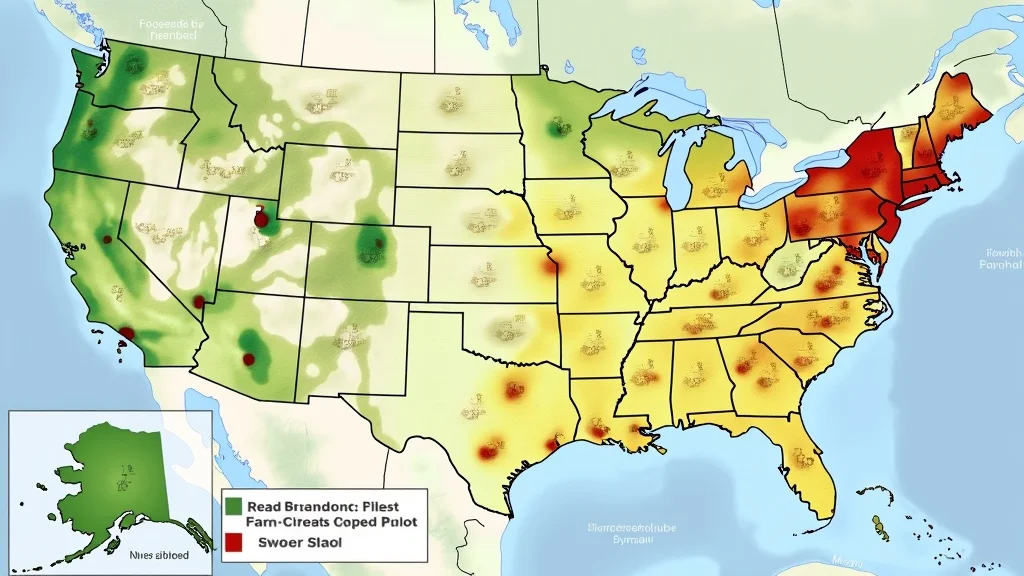
Minimum technical standards for meaningful digital loan approval require at least 2G connectivity in rural regions (GSMA, 2023). Service agency offices often become digital anchors, supplying internet access, troubleshooting support, and secure identity onboarding—essential in areas lacking domestic broadband.
Failure to anticipate mobile device constraints or connectivity gaps not only erodes uptake but can also introduce bias if certain farming operations or regions are systematically excluded from digital credit eligibility.
Local Language Support and User Experience in Agentic AI
- Connectivity benchmarks: Min. 2G coverage required for meaningful digital loan approval (GSMA, 2023).
- Referral models involving farmer organizations for onboarding have shown double the adoption among semi-literate women (CGIAR EdTech Pilot, 2023).
Voice prompt navigation, local script SMS, and multilingual digital advisors are no longer optional—pilot data from Bangladesh and rural India show that such features double engagement and reduce error in agentic AI farm loan platforms. User-centered onboarding is a make-or-break feature in the context of operational equity.
What You’ll Learn: Implementing Agentic AI Farm Loans 2026
- How agentic AI reduces farm loan approval times and cost-per-beneficiary
- Comparisons between public and private implementation models
- The operational requirements for reliable, inclusive scaling
Explainer video description: Animated video demonstrating key workflow steps in agentic AI farm loan approval. Follows the full cycle: farmer submits data, AI platform analyzes and risk scores, service agency completes in-person validation, and notification of approval/rejection is sent to the farmer. Field scenes and digital illustrations bring real-world farm settings and operational digital elements to life.
People Also Ask: Implementation Essentials for Agentic AI Farm Loans 2026
What infrastructure is required to deploy agentic AI farm loan systems at scale?
Essential infrastructure includes digital ID frameworks, reliable cloud and mobile connectivity, secure data APIs, full service agency integration, and at least 2G network coverage to onboard rural applicants (FAO Digital Policy Note, 2024).
How do agentic AI farm loans 2026 platforms handle data privacy and farmer consent?
Compliance with GDPR-style standards is mandatory, with digital audit logs for every credit decision. Informed consent interfaces and opt-in notifications for farmer data use are baseline (World Bank Privacy Review, 2024).
What languages and literacy supports are needed for wide adoption?
Trilingual voice guidance and local script SMS have doubled uptake among women farmers and semi-literate populations; local language onboarding and multi-format instructions are essential for inclusive scaling (CGIAR EdTech Pilot, 2023).
What is the minimum viable dataset for accurate AI risk management in farm lending?
A minimum of 24 months’ yield history, digital ID, mobile usage data, and recent satellite imagery is required for predictive risk parity with manual underwriting (IFC pilots, 2024).
How much does it cost per beneficiary to implement at scale versus pilot stage?
Pilots cost around $4. 10 per beneficiary; scaled (50,000+ users) deployments average $2. 25–$2. 90. Manual processes remain costly at $21–$29 per applicant (CGAP, 2024; World Bank, 2023).
How do agentic AI farm loans interact with existing agricultural lenders and service agency roles?
Agentic AI augments manual assessment—farm service agencies and lenders shift to oversight, technical troubleshooting, and grievance redress, not applicant screening (World Bank, 2024).
What regulatory or legislative gaps impact national scaling?
Most countries lack harmonized digital credit laws; scaling is often blocked by the absence of cross-ministry coordination and standardized compliance reporting highlighted by house agriculture committee reviews in 2024.
What evidence base exists for improved farmer income or credit quality?
Available pilot data show loan approval increases of 32% and steady repayment rates. Income gains occur only if agentic AI lending is paired with crop risk management training (IFC, 2025; IFAD, 2024).
Key Takeaways: Grounded Principles for Agentic AI Farm Loans 2026
- Agentic AI reduces turnaround time and cost, but only within robust digital infrastructure.
- Loan volume increases don’t guarantee improved income—risk management is essential.
- Regulatory clarity remains a fundamental requirement for sustained scaling.
FAQs: Operationalizing Agentic AI Farm Loans 2026
What is an agentic AI, and how does it function in agricultural lending?
Agentic AI refers to autonomous credit scoring systems authorized to make farm loan funding decisions based on multi-source digital data (satellite, farm service records, digital IDs). They reduce manual intervention, but require oversight to ensure equitable results (World Bank, 2023).
Who maintains oversight and accountability with automated loan approvals?
Oversight is maintained by farm service agencies and national regulatory bodies, which monitor digital audit logs, review adverse cases, and retain authority to intervene or override AI-driven decisions as needed.
What technical integrations are required for FSA and lender adoption?
Seamless cloud-based APIs linking digital farm records, mobile identification, and local agency workflow systems are essential for operational deployment at both pilot and scale.
Are there minimum connectivity or device requirements?
At least 2G mobile data connectivity is needed for rural onboarding, with tablets or smartphones for agency staff and affordable feature phones for farmer interaction. Offline workflows as fallback are necessary in network-poor regions.
How is data bias monitored and corrected in agentic AI farm loans 2026 platforms?
Ongoing validation studies, regular parameter review, and integration of ombudsman-style grievance channels allow agencies to track and remedy exclusion or algorithmic bias.
What are the legal obligations for consent, grievance, and redress?
Platforms must secure informed digital consent, maintain audit logs, and publish clear instructions for grievance escalation per national digital credit regulations and farm bill mandates.
What evidence distinguishes pilot from scaled program results?
Pilots often report higher adoption and satisfaction due to supplemental resources and training; at scale, operational bottlenecks and exclusion risks increase unless technical and regulatory prerequisites are met.
How do agentic AI models affect farmer credit eligibility and defaults?
Early results show higher eligibility—often a 30%+ rise in loan approvals with steady default rates when strong agency oversight and risk management are implemented.
Video description: Regulatory specialists from national farm service agencies and house agriculture committee panels discuss the operational safeguards, oversight challenges, and regulatory prerequisites for scaling agentic AI farm loans 2026.
Conclusion: What Evidence-based Implementation of Agentic AI Farm Loans 2026 Requires
Deploying agentic AI farm loans 2026 at scale requires: consistent digital ID and satellite integration, farmer-centric consent and grievance mechanisms, secure interoperability with farm service agencies, and regulatory clarity—prioritized before program expansion. Policymakers and agency managers must anchor rollouts in concrete evidence from scaled implementations, bridging piloted outcomes with robust national oversight.