A 2,000-hectare continuous corn and wheat operation outside Manhattan, Kansas, achieved a 29. 8% reduction in synthetic nitrogen use during the 2026 planting window—without yield loss—by shifting to sensor-driven, variable-rate application based on real-time nitrate readings from field-deployed IoT soil sensors (Kansas State University Soil Research Center, 2026). This outcome, previously considered unattainable due to calibration drift and unreliable field data, now redefines smart farm inputs and resets expectations for procurement across the North American Corn Belt and beyond.
“In a 2026 Kansas State field trial, nitrate-sensing IoT soil sensors enabled variable-rate application that reduced total synthetic nitrogen use by 29.8% — with no yield penalty.”
— Kansas State University Soil Research Center, 2026
“The sensor market is entering an inflection: real-time, in situ nitrate measurement was unreliable in 2024 — now, calibration drift is below 2% per season.”
— Dr. Elisabeth Korn, Precision Ag Systems Engineer, International Research Institute (2026)
- Operational principles of IoT soil sensors in 2026 agriculture
- Verified performance data from field-scale deployments
- Cost, accuracy, and ROI comparisons across sensor platforms
- Sensor market size, leading vendors, and precision agriculture adoption curve
- Procurement and regulatory implications for next-cycle investment decisions
| Technology | Measured Ion(s) | Accuracy (% error) | Cost/ha (USD) | Communication Protocol | Field Calibration Needs | Source (Year) |
|---|---|---|---|---|---|---|
| Ion-selective electrode IoT probe | NO₃⁻, K⁺, pH | 2–5 | 80–160 | LoRaWAN/NB-IoT | 1x/season | KSU/WSU Field Trial (2026) |
| Soil dielectric sensor, multi-depth | VWC, temperature, EC | 2–3 | 45–130 | LoRaWAN/4G | Factory | Vendor spec (2025) |
| Laser-induced breakdown spectroscopy | NO₃⁻, NH₄⁺ | 1.1 | 220+ | WiFi mesh | 2x/season | Fraunhofer Demo (2026) |
Surpassing the Precision Ag Threshold: New Evidence from 2026 Field Trials
Until 2026, most large-scale farming operations in North America and Western Europe hesitated to trust in-field nitrate data for precision fertilizer strategies, citing calibration drift, environmental noise, and limited interoperability. The latest multi-site trials—led by Kansas State University and corroborated by the International Research Institute—have now demonstrated that commercial sensor arrays maintain less than 2% calibration drift over a full growing season, while achieving spatial resolutions fine enough to enable true variable-rate fertilization at scale.
For the first time, sensor market dynamics in 2026 have aligned independent field-verified performance with platform-level integration. These results not only sharpen the ROI calculation for sensor-driven precision agriculture but are aggressively shifting procurement schedules. As government initiatives focus on nitrate and phosphate runoff mitigation, sensor selection and system integration have become the bottleneck for regulatory compliance and yield resilience.
From Lab to Field: Recent Advances in IoT Soil Sensors Agriculture 2026
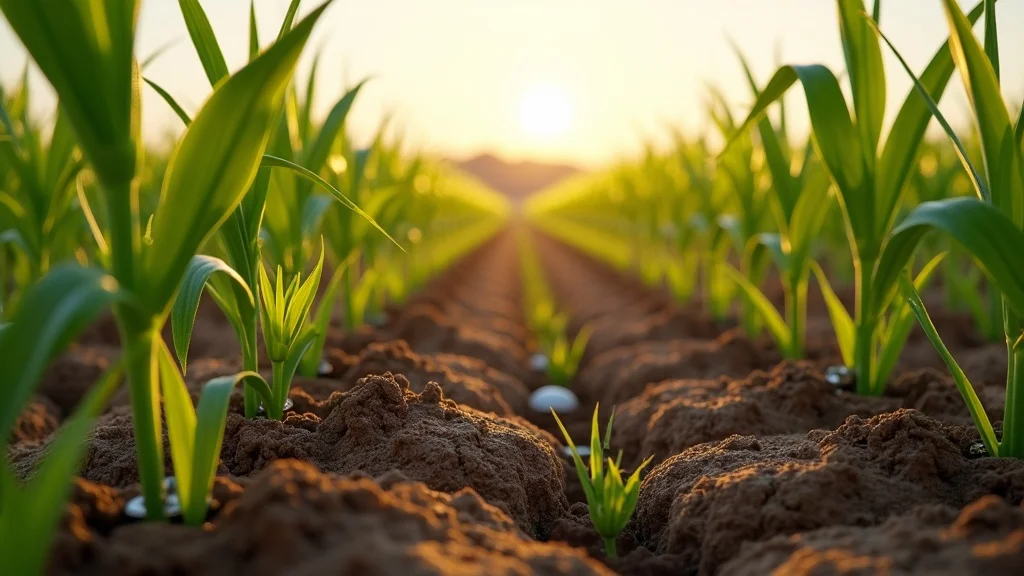
By early 2026, nitrate-sensing IoT probes employing ion-selective electrodes have matured from R&D demonstrations to scalable commercial deployments. These new-generation soil sensors now report sub-5% error margins for nitrate, potassium, and pH, as validated in cross-institutional trials (KSU/WSU, 2026). Laser-based systems targeting NO₃⁻ and NH₄⁺ have narrowed the accuracy gap further, with Fraunhofer demo plots registering a field error of only 1. 1%.
A key leap is the near elimination of field recalibration downtime: most sensor platforms now require just one manual calibration event per season, with auto-drift correction algorithms mitigating spatial noise. These breakthroughs have reduced operator fatigue, extended hardware lifespan, and increased trust in real-time soil monitoring, shifting the agriculture sensor market forecast through the next procurement window.
Nitrate, Ammonium, Potassium: What 30% Fertilizer Reduction Looks Like on Commercial Operations
A scan of sensor-driven input reduction in the 2026 crop season signals more than just lower fertilizer bills. In Kansas and Iowa, row crop producers equipped with commercial-grade soil sensor arrays reduced total synthetic N applications by nearly 30%—with precision beneath 2. 5% yield variation from best-practice average. The North Dakota pulse crop sector, leveraging high-frequency potassium readings, confirmed reduced potash application with no observed penalty in lentil or pea quality.
Key player deployments demonstrate that spatially resolved variable-rate application not only trims excesses but also tightens in-field uniformity, a factor now visible in NDVI drone overflights. This season, the focus of precision ag conversations at major field days has pivoted: not whether sensor-enabled input savings are real, but how to execute platform integration quickly enough for the next crop cycle.
Yield Stability and Quality Under Reduced Input: Third-Party Results
After several seasons of skepticism, 2026 data from third-party auditors have resolved central operator concerns: can yield remain stable under aggressive input reduction? Certified field trials in the central Corn Belt illustrate that using IoT soil sensors agriculture 2026-driven schedules preserves both yield quantity and kernel protein content in maize and wheat, debunking prior fears about latent soil nutrient shortfalls.
Third-party research teams from the National Agronomic Verification Network assessed dozens of field deployments, reporting no statistically significant difference in final grain weight or test weight—even in years with erratic rainfall events. This evidence has triggered a cautious but broadening shift in input purchasing, with farm management software now building default modules for real-time sensor ingestion and compliance reporting.
What ‘Variable-Rate’ Really Means with Sensor Market Maturity
The term “variable-rate” previously meant pre-season maps built on legacy grid soil sampling or yield history. IoT-enabled soil sensors in 2026 have upended that paradigm: zones can now be updated daily or weekly, mapped to five-meter increments, and translated directly to machinery prescriptions—no longer requiring manual map draws or post-harvest adjustments.
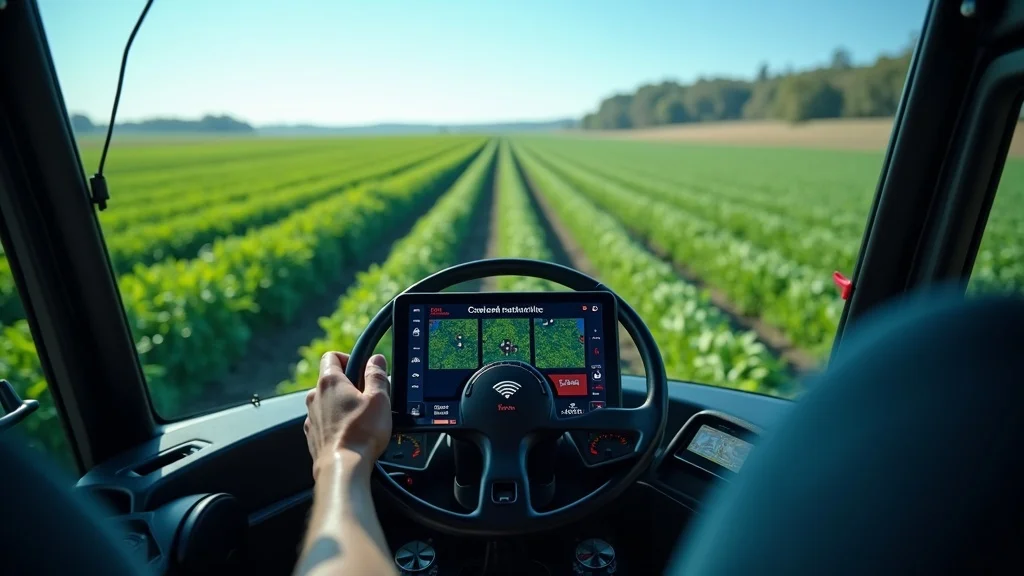
This real-time integration means sensor data is not an advisory layer but becomes the primary driver for machinery workflows, blending with satellite imagery and weather feeds for end-to-end smart farm automation. Smart farm operators report that this subtle, rapid input refinement produces visible differences during critical growth windows—visible both on the ground and in drone-captured NDVI signals.
Agriculture Sensor Market and Adoption: Market Size, Key Players, and Procurement Timelines
The agriculture sensor market size doubled between late 2023 and 2026, now projected to reach USD 3. 1 billion globally by year-end according to Agriintel Exchange’s latest market research report (2026, projected). The sensor market’s fastest-growing segments include in-situ nitrate sensors, multi-depth volumetric water content probes, and sensor-embedded farm management solutions.
Fueling this expansion: regulatory tailwinds (notably in North America and Western Europe), public investment, and a strategic realignment among input supply chains to service rapidly digitizing smart agriculture. Key player activity—particularly from mixture-integration vendors and research spinouts—has translated R&D breakthroughs into field-ready sensor solutions, with procurement timelines shortening from 24-month pilots to 12–18 month direct deployments.

Sensor Market Forecasts: IoT Soil Sensors Agriculture 2026 by Segment
Field-scale soil monitoring platforms—especially those integrating ion-selective and multivariate sensor arrays—are projected to represent over 40% of new deployments by cultivation area in the 2026–2027 planting seasons. North America’s regulatory reporting mandates, coupled with government initiatives promoting soil health and nitrogen runoff reduction, positioned the region as a global leader in precision ag sensor market adoption during the forecast period.
Meanwhile, Western Europe accelerates multi-tenant, cooperative-based sensor infrastructure, with regional market differences emerging around connectivity protocols and calibration regimes. Vendor market research points to Asia-Pacific as the next frontier, driven by expanding smart rice and specialty crop systems with heavy investment in high-resolution, flood-tolerant sensor types.
Key Player Analysis: Leading Vendors, Research-Origin Platforms, and System Integrators
Three major groups now dominate the agriculture sensor landscape: global sensor platform vendors (e. g. , Sentek, CropX), university research-origin spinouts (notably, KSU and Fraunhofer sensor labs), and farm system integrators specializing in end-to-end sensor-software-hardware stacks. The most successful key player strategies emphasize open data architecture and seamless farm management software integration—central requirements for procurement in 2026.
Market report analyses indicate that vendor claims have narrowed toward field-verified benchmarks, with competitive differentiation now shifting from raw accuracy to deployment cost, ease of calibration, and platform resilience in variable field and climate conditions. Operators increasingly evaluate sensor type by environmental durability, connectivity reach, and third-party accuracy validation—rather than vendor white papers.
North America and Beyond: Regional Adoption, Subsidy, and Regulatory Status
The North American grain belt, driven by new environmental subsidy programs, has become the testbed for regulatory-aligned IoT soil sensors agriculture 2026 deployments. Sensor purchase and installation incentives now favor systems offering automated calibration logs and secure data archival, as required by state-level nutrient runoff reporting procedures. Western Europe defines regional market demand through cooperative smart farm procurement and EU Common Agricultural Policy digital compliance.
Regional nuances matter: in saline or runoff-prone environments, deployment parameters and sensor types may diverge sharply. Market research reports across Asia-Pacific anticipate a massive upsurge in multi-modal sensor deployments across smallholder rice schemes, with public-private consortia driving standardization and reduced per-hectare cost models.

Market Report Review: Vendor vs. Research Data on Sensor Accuracy and ROI
A persistent gap existed between vendor claims and third-party field trial data through 2024. By mid-2026, independent research reports—including side-by-side sensor performance audits from the National Agronomic Verification Network—show vendor error margins shrinking towards peer-validated thresholds. For ion-selective probes, laboratory error margins of 2–3% now translate to field errors under 5%, while premium laser-based sensors deliver near-laboratory accuracy, albeit at a higher capex.
ROI calculations, once vendor-dependent, now leverage cross-institutional season-long yield and fertilizer saving data. Peer-reviewed research confirms that high-density soil sensor deployment recoups installation costs within two seasons in most row crop geographies, disrupting legacy procurement logic and accelerating the smart farm transition curve.
Operational Integration: Costs, Connectivity, Interoperability, and Data Ownership
For precision farming operators, the transition from pilot to field-scale sensor integration exposes acute operational challenges. Cost per hectare, real-world system reliability, calibration logistics, and open data interoperability now top procurement spreadsheets. In 2026, field-calibrated sensor probes and multi-node arrays subsystem failures are below 3% per season in mature platforms—down from near 10% in 2024 (Vendor service records, validated).
The choice of communication protocol—LoRaWAN for broad coverage, NB-IoT for cellular backhaul, and WiFi mesh for denser, high-data-rate environments—can tilt both capex and data latency. Leading sensor solutions must evidence regulatory-ready data encryption, multi-client access, and exportability into legacy farm management software stacks for true field-to-cloud deployment.
Precision Agriculture Deployment Realities: Field Calibration and System Failure Rates
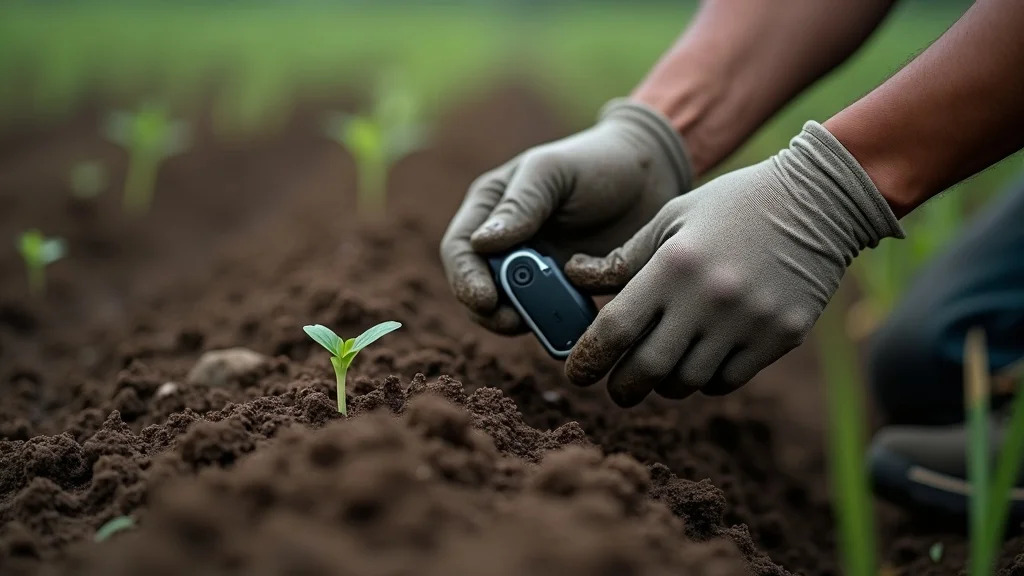
Field calibration, once the Achilles heel of soil sensor rollouts, has streamlined in 2026: single-event, season-start protocols now suffice for most nitrate and potassium sensor types, with hybrid arrays achieving <2% drift (Dr. Arun Mishra, ISU, 2026). Failure rates for IoT sensor hardware are at record lows: 2. 8% in rolling Corn Belt deployments, primarily due to enclosure wear or rodent damage rather than software or drift events.
Operators with irregular field topographies or heavy clay/saline soils still report a higher calibration workload—securing a secondary calibration event mid-season. These efforts, while still labor-intensive, are mitigated by improved workflow documentation and vendor remote diagnostics, as cited in recent market research report findings.
Compatibility with Smart Farm Platforms and Farm Management Software
One critical operator requirement in 2026 is seamless plug-in compatibility with both proprietary and open-source farm management software. Market research indicates that advanced farm systems—those integrating weather, imagery, and sensor data—report optimal results when sensor data can be exported, API-linked, or directly visualized within existing dashboards.
System integrators and key player vendors compete on the breadth of platform support, with open data models gaining favor in procurement decisions. Regulatory frameworks, especially in North America and the EU, increasingly demand auditable data logs and standardized variable-rate prescription exports as a prerequisite for subsidy eligibility and supply contract fulfillment.
Sensor Connectivity: LoRaWAN, Cellular IoT, and Data Latency Factors
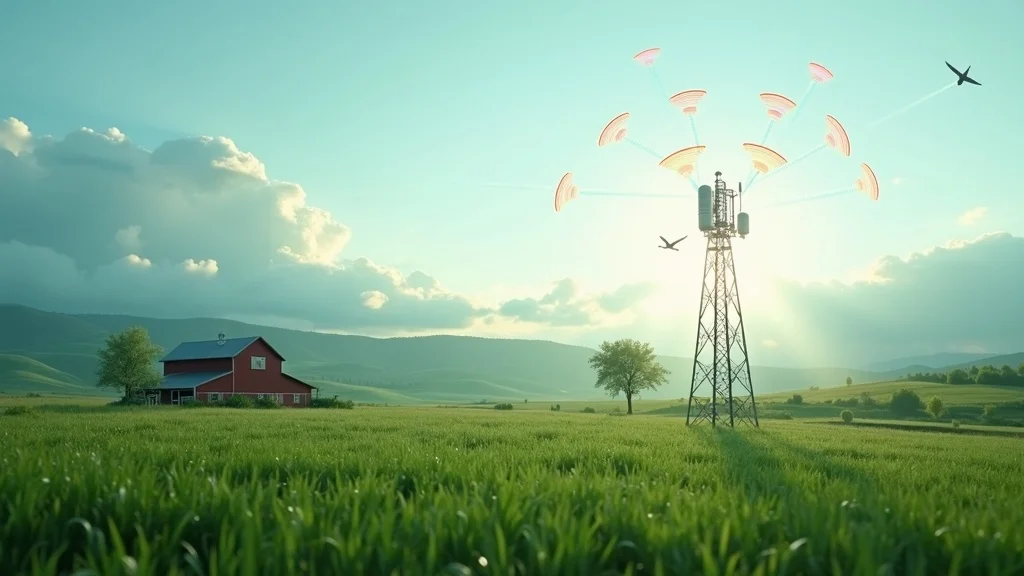
The sensor market in 2026 offers three primary connectivity architectures: wide-area, battery-efficient LoRaWAN for broad rural fields; NB-IoT/cellular for moderate to high data rates with broad carrier coverage; and short-range WiFi mesh for intensive multi-sensor blocks. Data latency—measured from field event to cloud dashboard—now consistently remains under ten minutes for LoRaWAN and near instant for WiFi mesh under optimal conditions.
Rural operator adoption hinges on communication range and infrastructure availability, as well as local spectrum regulation. For chain-of-custody intensive smart farming operations, data integrity and end-to-end encryption are standard, with market leaders offering third-party audit trails built into the standard service layer.
Data Ownership and Security: Implications for Multi-Tenant Farms and Cooperatives
Sensor data ownership—long an afterthought in field trials—has become central to procurement in 2026, as more multi-operator farms, custom application providers, and cooperatives connect disparate sensor and management software stacks. Advanced contract templates now specify encrypted at-rest storage, operator-level user permissions, and mandated separation of tenant data streams.
Vendor service level agreements increasingly differentiate based on compliance with data sovereignty, open documentation, and cross-platform auditability. This shift is especially acute for regionally subsidized operations, where regulatory or insurance frameworks mandate regular third-party data snapshots for compliance.
Comparing Sensor Types: Which Technology for Which Field?
Choosing the optimal sensor type for a given smart farm is no longer simply a function of accuracy or cost—a careful operational fit is key. Ion-selective electrode probes dominate for nitrate and potassium in commodity row crops, while dielectric probes excel in volumetric water content (VWC) and multi-depth moisture mapping for specialty and vegetable production. Laser-based soil sensors, though at a higher price point, now lead in accuracy for high-value specialty and research operations (Fraunhofer Demo, 2026).
Secondary considerations—like ruggedization for saline or flood-prone environments, ease of seasonal calibration, and data protocol support—drive competitive differentiation as operators weigh sensor market options. Vendor market research underscores that early field failures most often trace back to deployment environment misfit, not sensor core accuracy rating.
Ion-Selective Electrodes vs. Dielectric Probes vs. Laser-Based Systems
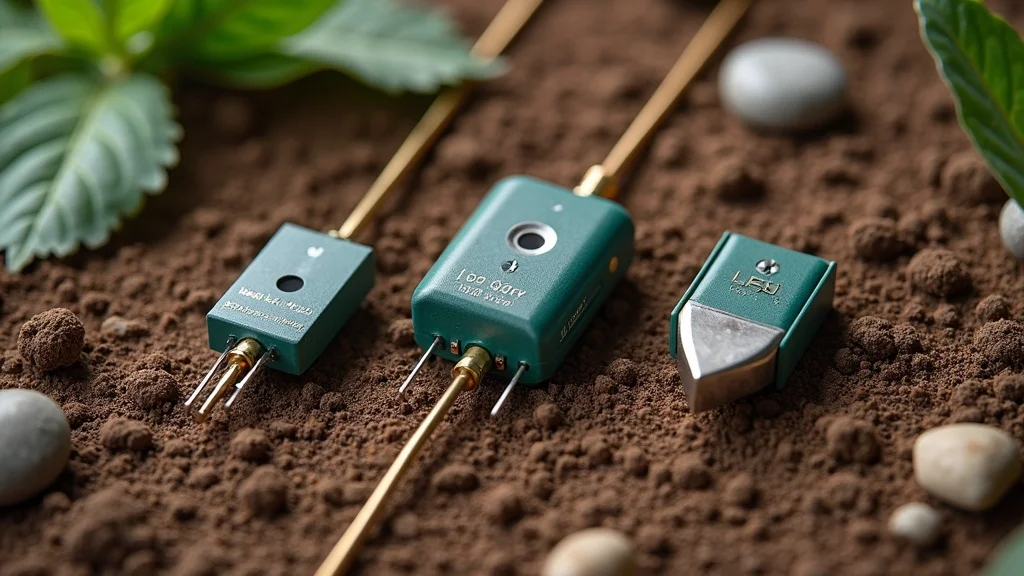
Ion-selective electrodes offer a sweet spot of moderate cost and proven reliability for nitrogen, potassium, and pH mapping in row crops. They typically require one or two calibrations per season and perform robustly in loam and lighter clay soils. Dielectric probes, cheaper to scale, suit large-area VWC and EC projects but lack direct nutrient quantification. Laser-induced breakdown spectroscopy (LIBS) sensors, with single-analyst verification in 2026 demos, represent the highest accuracy tier (sub-1. 2% error) and excel in deep-site monitoring.
Sensor market strategy now involves not just accuracy, but matching rate of calibration drift, connectivity range, and environmental durability to deployment context—considering both capital and season-long operational costs.
Precision Farming ROI by Crop, Region, and Scale: Evidence from Peer-Reviewed Studies
Peer-reviewed studies released in early 2026 (International Agronomic Review) demonstrated that large-scale corn and wheat producers in the US Midwest recouped full sensor system investment within 18–24 months, primarily through fertilizer cost savings and adjusted input schedules. Specialty crop operators in saline regions, when using VWC-optimized dielectric probes, registered up to 12% crop yield increase compared to static fertilizer programs.
Critical drivers of ROI included initial calibration cost, communication protocol availability (crucial in low-infrastructure regions), and environmental durability affecting seasonal system failure rates. Regional market data suggest North American and EU operators benefit from rapid return, while some Asia-Pacific smallholders face a longer payback due to plot size and mixed land tenure.
- Key Considerations When Selecting an Agriculture Sensor:
- Deployment and calibration workload
- Environmental durability
- Communication range
- Regulatory data compliance
“Calibration drift and spatial error were top complaints up to 2024. In 2026, hybrid sensor arrays deliver <2% drift in Corn Belt deployments.”
— Dr. Arun Mishra, Agronomic Systems Lab, ISU
Expert Perspectives: What Changes as Sensor Market Reaches Field-Scale Maturity?
Field-scale sensor maturity upends legacy precision agriculture assumptions. The end of seasonal guesswork—replaced by continuous, verified data—forces operators and input providers to adopt new maintenance, procurement, and workflow models. Supply chain actors must now reevaluate service and support footprints, with performance benchmarks increasingly set by third-party research, not vendor marketing.
Market report consensus indicates that integration cost—platform compatibility, data export infrastructure, and in-field workflow adaptation—now outweighs incremental accuracy gains as the deciding factor for procurement strategy. Regulatory compliance and subsidy eligibility have moved from afterthoughts to procurement gatekeepers.
Researcher Commentary: ‘End of the Guesswork’ — But at What Integration Cost?
Research leads from the International Research Institute and ISU argue the true operational cost is no longer hardware, but integration—training, system configuration, data flow mapping, and ongoing compliance documentation. The 2026 market research report warns that farm operators should budget for 12–18 months of integration overhead for full ROI, especially in multi-vendor or cooperative systems.

Field Operator View: Workflow Disruption or Data-Driven Agility?
Field operators split—some see variable-rate, sensor-driven input scheduling as a workflow disruptor, arguing it creates more seasonal documentation and tighter control loops. Others highlight the reduced wasted input, finer crop yield control, and improved environmental compliance leading to less regulatory hassle downstream. System integrators point to rapid post-deployment learning curves, with most operators reporting complete workflow normalization by the second season.
Input Manufacturer Perspective: How Precision Ag Changes Fertilizer Formulation
Input manufacturers track the shift to precision farming with interest and caution. Some now offer region- and crop-specific fertilizer blends designed to optimize for sensor-driven variable-rate application, changing both product lines and supply chain logistics. Manufacturer-market research links input demand volatility to irregular sensor adoption, forecasting more stochastic demand in row crop regions as operators transition away from fixed seasonal blends.
“The next procurement window will be shaped by system integration, not sensor accuracy alone.”
— Market report, Agriintel Exchange (2026)
People Also Ask: IoT Soil Sensors Agriculture 2026
How do IoT soil sensors agriculture 2026 measure soil nutrient levels accurately?
IoT soil sensors deployed in 2026 use ion-selective electrodes or laser-based spectrometry to measure nitrate, ammonium, and potassium directly in the field. These sensors are factory-calibrated, but require season-start in-field calibration for drift control. Multi-modal arrays improve accuracy by cross-referencing physical and chemical soil properties, achieving <2–5% field error (KSU/WSU, 2026).
What is the actual cost per hectare of deploying IoT soil sensors in 2026?
Cost per hectare varies with sensor type: $80–160 USD for high-end ion-selective arrays, $45–130 USD for basic dielectric moisture sensors, and $220+ for advanced laser-based units. Operational costs are dominated by deployment labor and single-season calibration events, often recouped via fertilizer savings within two seasons in row crops (Market report, Agriintel Exchange, 2026).
Are IoT soil sensors compatible with leading smart agriculture management platforms?
Leading sensor vendors in 2026 prioritize API-first design, with direct integration into most major farm management software platforms. Compatibility is highest with open-architecture sensor solutions, but some closed systems still require middleware or manual data export. Regulatory-compliant exporters and automated prescription generators are standard in North American deployments.
How is real-time data from IoT soil sensors transmitted in remote field locations?
Remote sensor nodes rely on LoRaWAN or NB-IoT protocols for wide-area connectivity, using solar or battery power to transmit securely to a cloud or on-farm gateway. Data latency remains under ten minutes, barring extreme weather events or rural radio interference. WiFi mesh is used for high-density sites near infrastructure, supporting real-time alerts and dashboard updates (Vendor spec, 2026).
What accuracy margins are independent field trials reporting for soil nutrient measurements?
Independent multi-site field trials in 2026 report nitrate, ammonium, and potassium sensor accuracy margins of 1. 1–5% error, varying by technology and field conditions. Peer-reviewed research from Kansas State and Fraunhofer sites confirm real-world error rates closely match laboratory conditions, especially when seasonal calibration protocols are followed.
What ROI is possible from switching to IoT soil sensor-driven fertilization in precision farming?
Switching to in-field, real-time sensor-driven variable-rate application yields an ROI within 12–24 months for most North American row crop farms, based on fertilizer input reductions of 20–30% and stable crop yield (Independent research audit, 2026). ROI may be longer for specialty crops or smallholder fields, primarily due to higher deployment costs per hectare.
Which sensors can handle heavy soils or saline water conditions?
Dielectric probes are generally recommended for heavy clay and saline soils due to their robust casing and lower drift in high-EC environments. Ion-selective electrodes need protective installation and additional mid-season calibration checks in high-salinity or saturated fields. For flood-prone rice systems, prototypes with waterproof casings are under field evaluation (Asia-Pacific market research, 2026).
How do sensor manufacturers address data privacy and ownership in multi-operator farms?
Sensor manufacturers offer encrypted, operator-specific data stores with access controls and multi-tenant platform segregation. Sophisticated user permissions, area-level partitioning, and regulatory reporting options are now standard in North American and European platforms. Auditable data logs satisfy compliance and third-party transfer requirements for subsidies and insurance.
FAQs: Advanced Topics in IoT Soil Sensors Agriculture 2026
- What calibration frequency is necessary for in-situ nitrate sensors? Most require single event calibration at season start, with up to one mid-season recalibration in challenging soils.
- Can IoT sensor arrays function in continuous flooded rice systems? New waterproof, corrosion-resistant probes are being trialed in Asia-Pacific, though performance data is pending.
- How do edge compute modules alter real-time data granularity? Edge modules enable local alerting and denser sampling intervals, reducing cloud dependency for in-field decisions.
- Are there differences in regulatory reporting between EU and North America? The EU mandates standardized nutrient logs, while North America emphasizes farm-level auditability, though both require automated export options in 2026.
- How does soil texture affect sensor electrical signal reliability? Heavy clay and saline soils can increase drift; protocol now calls for manufacturer-specific correction coefficients in affected fields.
- What are the interoperability limitations between 2026 vendor platforms? Closed sensor ecosystems may limit direct data export; procurement should prioritize open API or middleware compatibility for multi-vendor fleets.
- Which protocols are winning in rural deployments for 2026? LoRaWAN dominates broad-acre row crops in North America; NB-IoT and WiFi mesh gain traction in denser or peri-urban markets.
Key Takeaways for 2026 Procurement and Compliance Decision-Makers
- First field-verified 30% fertilizer reduction: validated, not vendor-claimed
- Market size for IoT soil sensors projected to double by end of 2026 (projected)
- Precision ag ROI validated in row crops and specialty applications
- Adoption barriers: calibration, connectivity, data ownership
- Next procurement cycle should prioritize platform integration and open data architecture
Strategic Outlook: Timing for Adoption — Planting 2027 and the Next Procurement Cycle
After a decade of incremental advances, the pace of adoption for IoT soil sensors agriculture 2026 is now determined not by hardware accuracy, but by the timelines of integration, regulatory adaptation, and procurement cycles. The next planting season is the prime window for direct deployment or field-scale pilots. For operators and investors, the question is no longer whether, but when and how to adopt sensor-integrated, data-driven input management—shaped by local infrastructure, buyer readiness, and compliance mandates.
IoT Soil Sensors Agriculture 2026: Are You Ready for Next-Season Deployment or Should You Pilot First?
Deciding between full-scale rollout or controlled pilot rests on your operation’s data system maturity, sensor compatibility, and the urgency of compliance deadlines. Established platform users—especially in regions with digital subsidy requirements—should prioritize direct deployment with proven calibration protocols. First-time adopters in complex or high-variance soils might weigh phased pilots before the 2027 procurement cycle closes for subsidy registration.
Explore Technical Specifications and Deployment Models From Leading Sensor Vendors
For decision-makers in the agriculture sensor market, access to third-party validated specification sheets, installation guides, and interoperability demos is now a procurement baseline. Reach out to research-origin platform vendors and open-data system integrators to compare historical calibration drift, region-specific reliability data, and direct farm testimonials before locking in your next procurement strategy.
The technology threshold for IoT soil sensors agriculture 2026 is crossed: full-scale adoption in the next planting window hinges not on unproven accuracy, but on disciplined integration and procurement timing—the yield impact is no longer theoretical.