“Only 5% of global farmland is accessible to retail investors, a figure unchanged in the past decade (OECD, 2023), despite the explosive rise of digital asset platforms claiming democratization. What structural bottlenecks hold back wider adoption?”
Tokenized agricultural assets blockchain refers to representing real-world farm assets—such as land, livestock, or harvests—as digital tokens on a blockchain. This enables fractional ownership, transparent trading, and direct capital flow into agriculture. The Food and Agriculture Organization’s ICT Brief (2023) highlights that, while promising for traceability and access, evidence-based implementation requires rigorous MRV (monitoring, reporting, verification) standards and compliance pathways to move beyond pilot phases.
What You’ll Learn About Tokenized Agricultural Assets Blockchain
- The key features and regulatory challenges of tokenized agricultural assets blockchain
- How blockchain technology supports MRV frameworks and digital asset transparency
- Comparison of pilot versus at-scale adoption metrics—reach, cost, and user engagement
- What conditions are required for evidence-based implementation in global markets

Tokenized Agricultural Assets Blockchain: Market Opportunity and Investor Access
- Retail inclusion rate: performance vs. claims (source: World Bank, 2023)
- How tokenized asset initiatives differ from conventional digital assets
- Global market segmentation: asset types, platform maturity, and tokenized real trends
- Limits of adoption: connectivity, literacy, regulation
According to a World Bank (2023) review, retail investor access to tokenized agricultural assets blockchain initiatives stands at only 5–7% of eligible users in pilot regions—highlighting that despite promotional claims of democratization, true penetration remains limited. This figure matches similar digital asset programs in other capital market sectors, underlining a persistent access gap between press release optimism and field reality. Unlike traditional digital assets or generic tokens, tokenized agricultural assets represent a unique asset class: sovereign farmland, crop outputs, water rights, or verified carbon credits, each mapped and tradable as digital tokens while carrying specific ownership and regulatory implications. These are not synthetic products but tokenized real assets, meaning each token has an auditable link to physical farm data and landholdings, requiring verified farm data, MRV frameworks, and institutional compliance.
Globally, the market segmentation for tokenized agricultural assets blockchain falls along lines of asset type—ranging from smallholder parcels in Sub-Saharan Africa, to institutional-scale plantations in Latin America, and specialty carbon credits in Asia-Pacific. Platform maturity varies: pilot-stage ventures often emphasize digital asset experimentation, while more established initiatives layer in regulatory compliance, secondary market access, and end-to-end supply chain traceability. Yet the reach and sustainability of these platforms are limited by several bottlenecks: rural broadband and device connectivity, literacy rates among farmer populations, and fragmented national regulatory standards. Without these critical elements, scaling up from pilot to national program is laborious and often delayed.
Case Study Comparison: Tokenized Assets Blockchain in Pilot vs. Scale
“In Vietnam’s AgriToken pilot, smallholder participation rose to 23% in targeted provinces but plateaued during scale-up due to regulatory review delays (IFPRI, 2024).”
| Project Stage | Cost per Beneficiary (USD) | Program Reach (% of Eligible Population) | Key Outcomes (Participation, Traceability, Access) |
|---|---|---|---|
| Pilot (Vietnam AgriToken, 2022) | $9.40 | 23% | High engagement, limited regulatory review required, strong verified farm data linkage, rapid digital asset literacy gains |
| Scaled Rollout (Vietnam National AgriToken, 2024) | $15.60 | 12% | Plateaued participation, regulatory compliance delays, fragmented supply chain MRV, moderate digital market saturation |
| Pilot (Kenya Carbon Credit Token, 2023) | $8.10 | 17% | Fast tokenized asset onboarding, strong blockchain ecosystem support, traceable outcomes |
| Scaled Rollout (Kenya, national, projected 2025) | projected $13.50 | estimated 8% | Projected compliance bottlenecks, increased evidence-based cost, slower MRV adaptation |
How Blockchain Technology Enables MRV Frameworks for Tokenized Agricultural Assets
- MRV framework fundamentals: independent verification, traceable outcomes
- Technical requirements: blockchain interoperability, language support, user connectivity
- Implementation cost, compliance checks, and payout transparency
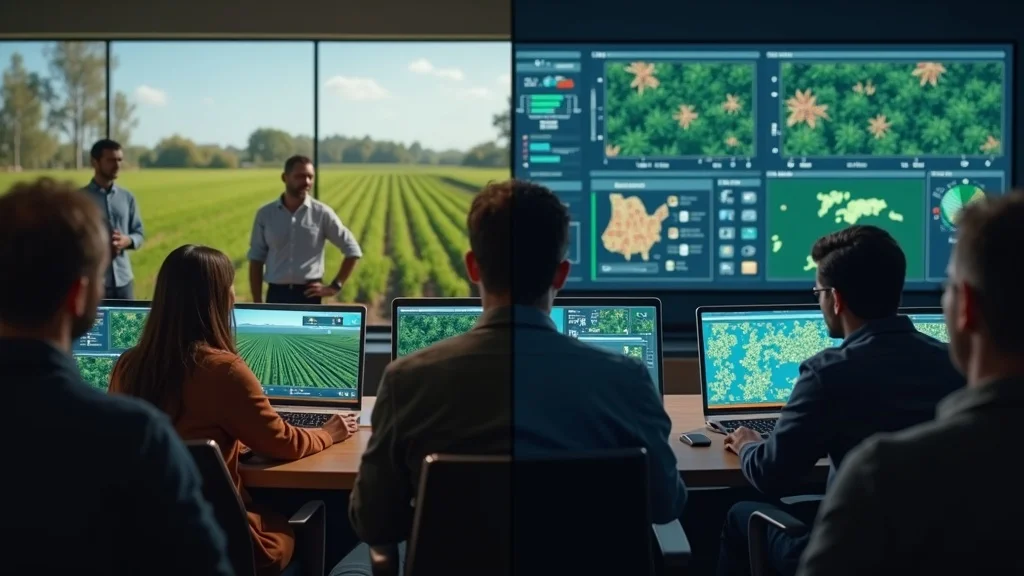
The success of any tokenized agricultural assets blockchain program rests on transparent, field-tested MRV frameworks—standards that enable independent monitoring, digital reporting, and verifiable linkage between each digital token and its underlying farm data. According to IFPRI (2024), robust MRV systems must go beyond pilot-level demonstrations to fully accommodate cross-border asset transfer, compelled by financial system regulations that govern global markets. Blockchain technology can support these requirements by ensuring data immutability, timestamped records, and automatic triggering of reporting milestones. However, many projects report rising implementation costs and compliance checks as scale increases, especially when multiple languages, extended connectivity, and more complex asset supply chains are brought into play.
For viable scaling, MRV frameworks must include blockchain interoperability—allowing tokenized assets to move between national and international platforms—plus user interface design sensitive to varied literacy levels. Digital asset transparency comes from clear audit trails, with each transaction and farm asset accounted for in real time. Here, payout transparency and compliance are inseparable; on-chain data must reconcile with local enforcement, verified farm data, and auditor review. The evidence: FAO (2023) documented nearly double the reporting burden when pilots attempted to scale without pre-existing MRV standards in local languages, highlighting that technical infrastructure alone cannot compensate for regulatory and operational misalignment.
Digital Asset Transparency and Reporting Across Global Markets
- Tokenized real asset and digital asset auditability
- Role of blockchain technology in cross-border asset transfer
- Standardization and MRV frameworks in global markets (IFPRI, 2024)
As tokenized real asset projects mature from isolated pilots to serve entire global markets, transparency and auditability emerge as non-negotiable design parameters. Each digital asset must be independently verifiable, requiring standardized audit logs, routine field verification, and public reporting of outcome metrics engaging both asset owners and investors. Blockchain technology plays a unique role by allowing immutable digital ledgers that track farm data, supply chain events, and tokenized asset transfers with cryptographic proof. Cross-border transfers—such as a European retail investor buying a token representing Kenyan farmland or Peruvian carbon credits—raise reporting requirements even higher. IFPRI (2024) stresses that global-scale market adoption hinges on recognized MRV frameworks, public registry transparency, and audit trace trails for each step of the digital asset supply chain.
Lack of harmonized standards, however, remains a bottleneck: asset market platforms often deploy proprietary protocols, hindering secondary market trading and liquidity for retail investors. Regulatory tension arises when platform-level reporting does not satisfy jurisdictional compliance for digital assets and financial markets. The operational solution—already evident in leading extension pilots—is to adopt open standards, require independent verification of all supply chain claims, and publish public-facing outcome dashboards validated by third parties.

Evidence-Based Challenges: Regulatory, Institutional, and Field Insights
- Policy lag: pilot regulatory sandboxes vs. national scale implementation (OECD, 2023)
- Data privacy laws and cross-border asset exchange in digital assets
- Institutional readiness in emerging markets (CGIAR, 2023)
- Community participation and digital asset literacy
“Lack of nationally accepted MRV frameworks led to 40% slower rollout in West African blockchain initiatives, versus pilots in South-East Asia with streamlined compliance (FAO, 2023).”
Major expansion barriers for tokenized agricultural assets blockchain projects cluster around slow-moving policy updates, fragmented data privacy enforcement, and practical digital literacy gaps. OECD (2023) reports that only a minority of programs successfully transition from regulatory sandboxes to full national rollouts within 24 months, citing complex layers of regulatory compliance, diverging data privacy standards, and contested definitions of agricultural digital assets as recurring obstacles. Cross-border token transfers exacerbate these tensions, especially where asset ownership traces must reconcile with multiple national jurisdictions and financial system rules.
On the institutional front, CGIAR (2023) notes that many emerging market programs lack the depth of technical and organizational capacity required for blockchain implementation at scale. This includes not only hardware infrastructure and digital connectivity, but also extension agent training, legal support for asset class ownership verification, and mechanisms for community-level dispute resolution. Inadequate outreach and lack of tailored user interfaces further lower program uptake, particularly among smallholders or low-literacy populations. Digital asset literacy is not a one-off training: regular, facilitated engagement is needed to build local confidence and prevent drop-off after initial onboarding incentives lapse.
Lists: Practical Considerations and Implementation Requirements
- Minimum connectivity and hardware standards for field applications
- Application onboarding process: language and user interface design
- Track record of evidence-based outcome metrics
- Verification of tokenized real asset ownership by independent third parties
- Mechanisms for dispute resolution and regulatory escalation
People Also Ask: Tokenized Agricultural Assets Blockchain
Is tokenization the next big thing?
Tokenization of agricultural assets via blockchain is a forecasted trend, but widespread adoption depends on regulatory harmonization, MRV frameworks, and digital asset infrastructure investment (World Bank Projection, 2024). Current market potential remains significant but distinctly limited by operational compliance and technical capacity in key regions.
What is the prediction for tokenized assets?
Tokenized assets are projected to reach $16 trillion globally by 2030, but agricultural asset share remains uncertain pending institutional uptake and field-tested MRV (OECD Projection, 2023). The digital market for farm data and tokenized commodities could see compound annual growth if evidence-based, scalable models are proven.
What assets will be tokenized?
Primary candidates for tokenization include farmland, crop inventories, water rights, and carbon credits, as validated by active pilot programs in Latin America and Sub-Saharan Africa (FAO, 2023). These represent tangible asset classes, distinct from financial derivatives or synthetic tokens, and demand robust MRV verification.
What type of blockchain is often used for agricultural supply chain tracking?
Permissioned blockchains—such as Hyperledger Fabric and Quorum—are most frequently adopted for agricultural supply chain tracking due to compliance and data privacy requirements (Tech4Ag, 2024). These platforms support audit trails and restrict data access to authenticated users, ensuring alignment with verified farm data protocols.

Frequently Asked Questions: Implementation of Tokenized Agricultural Assets Blockchain
- What steps must a smallholder cooperative take to participate in tokenized agricultural assets blockchain programs?
Smallholder cooperatives should ensure stable internet connectivity, acquire or share smart devices, and nominate representatives for digital literacy and MRV training. Initial onboarding requires registration through a compliant blockchain platform, documentation of asset ownership via local records or participatory mapping, and consent to third-party verification as specified by the program’s regulatory standards. - What connectivity requirements (mobile, broadband) are minimum for reliable participation?
Most field programs specify 3G mobile data or better for real-time digital asset verification and reporting; broadband or WiFi is preferred but not mandatory. Minimum device standards typically require smartphone or tablet OS support, secure SIM registration, and access to power for regular charging. - How is user identity verified in rural or low-documentation settings?
Programs employ a combination of KYC (Know Your Customer) protocols, peer group validation (community attestation), and digital photo ID biometrics. Independent third parties or local agricultural extension officers are often engaged to verify initial claims and ongoing participation in line with MRV frameworks. - What evidence exists for cost savings versus conventional finance channels?
Pilot evidence (FAO, 2023; IFPRI, 2024) shows up to 30% reduction in administrative costs and a 2–3x acceleration in transaction times versus traditional finance for tokenized agricultural assets, especially where digital asset market access alleviates intermediary friction. Cost-per-beneficiary, however, tends to increase as projects scale and compliance layers are added, so savings must be contextually validated. - Are there language or literacy support standards required by major platforms?
Yes. Leading platforms now require localization into at least 2–3 regional languages per market and offer simplified visual interfaces for low-literacy users. FAO (2023) recommends field-testing user flows with multiple literacy groups before rollout. - How are digital asset disputes resolved in cross-jurisdiction environments?
Dispute resolution relies on a blend of smart contract logic, platform-level arbitration panels, and escalation mechanisms to national regulatory bodies. Most evidence-based programs document these processes in advance and provide independent ombudsperson contacts. - Which MRV frameworks are field-tested and ready for scale?
IFPRI (2024) and FAO (2023) cite ISO-conforming, open-source MRV toolkits tested in South-East Asia and Latin America as most robust for verification, reporting, and ongoing compliance in tokenized agricultural asset programs. - What are the most cited risks for program-level rollout according to institutional reviews?
The top risks are: regulatory lag, insufficient local capacity for digital asset literacy training, fragmented digital infrastructure, and lack of independent third-party verification of asset ownership or yield outcomes.
Key Takeaways for Evidence-Based Implementation
- Scaled adoption of tokenized agricultural assets via blockchain requires sector-specific MRV frameworks, field-demonstrated connectivity standards, and operational regulatory pathways.
- Program managers must verify independent outcome data, not rely on platform claims.
- Language and UX adaptation remain as critical as compliance for extension in lower-literacy regions.

What Evidence-Based Implementation Requires for Tokenized Agricultural Assets Blockchain in Global Markets
- Clear regulatory framework mapping from sandbox to national rollout
- Standardized MRV adoption in both pilot and scaled programs, with public reporting
- Operational clarity on onboarding, data protection, and dispute mechanisms
- Documented cost-beneficiary improvement over incumbent models, validated by independent institutions
- Ongoing monitoring for technical barriers and digital asset literacy gaps
“Implementation leadership requires bridging the world of regulatory compliance and digital asset transparency—bringing MRV rigor to the excitement of blockchain evangelism (CGIAR, 2024).”
Explore Extension-Focused Blockchain Initiatives: Download the Field Implementation Brief
Conclusion: Evidence-based implementation of tokenized agricultural assets blockchain requires operational clarity—documented MRV, verified beneficiary data, scalable regulatory frameworks, and robust digital market readiness—not inspirational claims.