“500 million smallholder farmers produce 35% of the world’s food — yet most can’t get the agricultural credit digital lending promises. Why?”
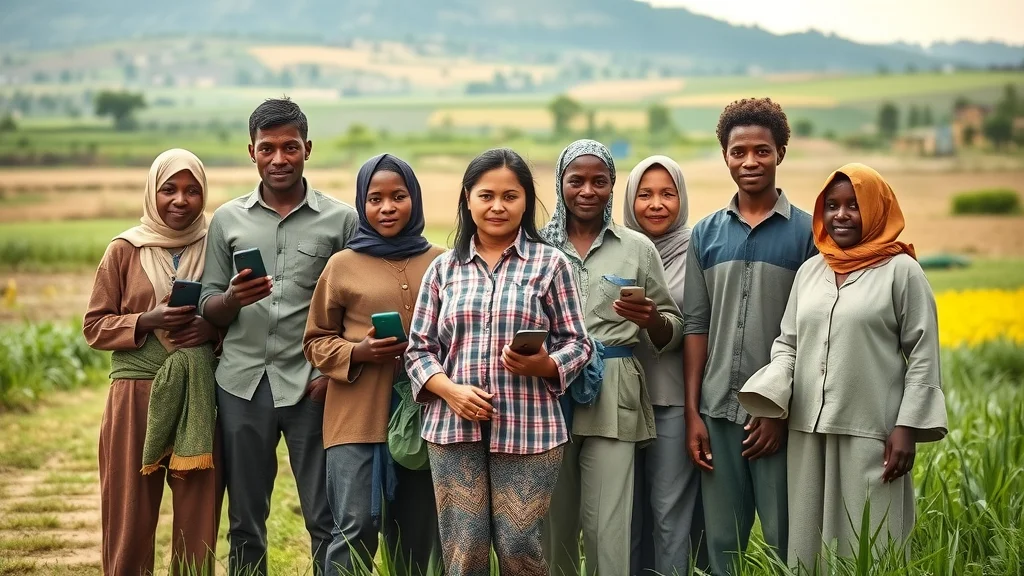
Picture this: a cassava farmer in Ghana taps her smartphone, scrolling past glossy app promises of instant loans and higher yields. She grows enough to feed dozens every harvest, yet when planting season arrives, the $150 she needs for seeds and fertilizer remains out of reach. Multiply her story by 500 million—the number of smallholder farmers worldwide who together produce a staggering 35% of global food—and the true scale of the crisis comes into focus. Despite agriculture driving between 20% and 40% of GDP in many African nations, commercial banks allocate less than 6% of their lending to the sector. The resulting financing gap—estimated by the AfDB and World Bank at $75–170 billion—has left the world’s food producers with little choice but to rely on informal lenders that siphon their hard-earned income through predatory rates. Agricultural credit digital lending has surged as the supposed solution, promising to turn the humble farmer into a new asset class through the magic of AI, satellites, and mobile phones.
But technology alone doesn’t fill hungry stomachs or balance the ledgers of ag lenders and community banks. The uncomfortable truth is that, despite a flood of innovations and investor hype, only about one-third of a mind-boggling $238 billion in annual smallholder credit demand is met globally. The gap isn’t just about money—it’s about timing, logistics, risk, and whether digital credit platforms can truly deliver for those they claim to serve. The stakes couldn’t be higher: lives, livelihoods, rural economies, and the very food security of billions.
What You’ll Learn: Truths and Trade-Offs in Agricultural Credit Digital Lending
-
Why the $170B credit gap persists despite innovations in agricultural lending
-
The mechanics (and misfires) of agricultural credit digital lending — from AI to satellites
-
Risks no one talks about: over-indebtedness, logistics, and data governance
-
Why Caribbean agricultural producers hold the next big test case for agricultural credit digital lending
-
Forward signals: What ag lenders, community banks, and fintech boards of directors should actually be tracking
By the Numbers: Unmet Demand for Agricultural Credit Digital Lending
|
Data Point |
Source |
|---|---|
|
$75B Africa gap |
AfDB/World Bank |
|
<$6% bank lending to ag |
World Bank /SAFIN |
|
$200B+ global gap ($323B demand) |
ISF 2025 |
|
30–50% yield increases |
Digital Frontiers Inst. 2025 |
|
85%+ repayment rates |
DFI/GSMA 2025 |
|
350,000+ farmers reached by Apollo Agriculture |
GSMA 2025 |
“Smallholder farmers are very fragmented. They don’t keep farm records. They have no bank accounts. They have a productive asset — land. But they can’t get the money to invest in tools to succeed.” – Benjamin Njenga, Apollo Agriculture
Ground Truth: Why Community Banks and Ag Lenders Leave Farmers Behind
Community banks and established ag lenders have traditionally regarded agricultural lending as a stretch too far on the risk spectrum. A farm’s unpredictable cash flow, vulnerable to everything from drought to volatile input costs and erratic grain markets, isn’t the sort of business that comforts a board of directors scrutinizing their institution’s balance sheet. Loan renewal for agricultural producers lacks the robust documentation—income statements, collateral, clear cash flow analysis—that banks require. The upshot? Agriculture is carved out of most lending portfolios, left to survive on informal and often exploitative credit systems structured outside of the farm credit system.
Value never really flows through the credit system or the balance sheets of regulated banks; instead, it runs along complicated webs of trust—informal lenders, family, and local buyers. Operators and fintech founders know it well: ag lending proposals that play well in annual reports rarely survive the scrutiny of a wary rural community bank’s board of directors. Until recently, few would bet on smallholder farm credit as a scalable, investable proposition.

Agricultural Credit Digital Lending: The Shift from Talk to Transactions
The emergence of agricultural credit digital lending isn’t just another fintech fad—it’s a seismic shift in how value, data, and trust circulate in the rural economy. Instead of waiting for a rare in-branch encounter or hoping for a sympathetic community bank loan officer, today’s agricultural producers build credit history through mobile phone transactions. The magic, such as it is, comes from pairing mobile money infrastructure with the data analytics muscle of AI and satellites. Mobile phones allow farmers (even those without traditional credit records) to move money, receive farm credit, and build up a digital footprint. AI crunches transaction patterns, seasonal purchase data, and even satellite imagery of crop and livestock activity to establish a risk profile no balance sheet or income statement could replicate.
Take Kenya’s Apollo Agriculture—an ag lender now serving 350,000+ farmers. Their system triangulates crop health observations from satellites, mobile money transaction flows, and field agent notes to provide small farm credit for as little as $115 per hectare, repaid only after harvest. The approach? Lend-to-learn. Loans go to as broad a set of profiles as possible, feeding the AI engine more data and gradually sharpening its risk and repayment predictions. “AI and machine learning technologies allow you to use alternative data sets to build customer profiles and make a lending decision remotely. It enables you to serve that smallholder farmer in a scalable and profitable way,” says Benjamin Njenga, Apollo’s founder. Uganda’s EMATA, meanwhile, digitizes every step of the livestock value chain, linking loan disbursement to real commodity sales data. Nigerian agri-fintech Babban Gona provides 100,000+ farmers with access to not just seasonal farm credit but also portfolio dashboards that give risk-shy banks unprecedented transparency.
How Agricultural Credit Digital Lending Actually Works (Beyond the Pitch Deck)
Practical farm credit is about more than shiny smartphone apps or buzzword-laden pitch decks. For most agricultural producers, the pivot to digital starts not with a loan but with an everyday mobile money transaction—a fertilizer purchase, a crop sale, a payment to a laborer. Each tap of the phone creates a data point and, together, these form the informal credit histories ignored by the traditional banking credit system. The new breed of ag lending fintechs use this data to run risk models, moving lending decisions from the hands of cautious board of directors deep into algorithms powered by AI and satellite insight.
While Apollo Agriculture ranks among the most data-savvy, others follow suit. Mastercard Farm Pass, through its partnership with Farmerline in Ghana, assembles transaction-level records that, within months, allow thousands of previously invisible rural farmers to become viable subjects for community bank partnership loans. The entire system is built on one core reality: once data circulates, finance follows. Or, as a Forrester study succinctly put it, “When finance follows data, rural farming becomes bankable, scalable, and investable. ”
“AI and machine learning technologies allow you to use alternative data sets to build customer profiles and make a lending decision remotely. It enables you to serve that smallholder farmer in a scalable and profitable way.” – Njenga, Apollo Agriculture
Agri-Fintechs at the Frontline: Community Banks, Bundles, and Farmer Outcomes
The parade of agri-fintech players is now continent-wide. EMATA in Uganda digitizes value chains and delivered $1. 5 million in digital loans in 2024 alone, aiming for $100 million in five years with plans to leap into new cash and livestock value chains in Tanzania and Ethiopia. Babban Gona, IFC’s partner in Nigeria, has bet on radical transparency—hundreds of portfolio dashboards give every ag lender and commercial bank partner daily visibility, erasing some of the classic anxieties about farmer risk. Farmerline, operating across Ghana and now further afield, harnesses WhatsApp’s ubiquity to provide AI-powered advisory, credit monitoring, and digital recordkeeping in 27 languages. The common theme? Data replaces collateral; informal transactions become a digital trail that can be assessed, underwritten, and, crucially, audited, making both farm credit and loan renewal practical in good times and bad for rural communities.
As Efayomi Carr of Flourish Ventures puts it, “Economies of scale have allowed them to deliver a product with attractive unit economics in a way that didn’t exist even three years ago. ” In each case, the fintech’s stack isn’t just about loan disbursement. The winners are those who’ve learned to bundle—credit plus input delivery, insurance, and even forward contracts for crop sales, all wrapped around the unpredictable rhythms of farm financial risk and rural economy seasonality.

“When finance follows data, rural farming becomes bankable, scalable, and investable.” – Forrester
Why Agricultural Credit Digital Lending Fails as Often as It Succeeds
Repayment Isn’t the Only Metric: The Hidden Costs of Fast Loans
Here’s the part most pitch decks skip: just because digital loans get repaid doesn’t mean farmers aren’t drowning in debt. Over-indebtedness risk—the shadow side of fintech’s speed and accessibility—lurks beneath the headline numbers of 85%+ repayment rates. Alternative credit scoring can ace its predictive task for the ag lender but ignores the possibility that borrowers repay out of desperation, selling livestock or skimping on meals to clear the debt and qualify for renewal. Farmers don’t report hardship on a balance sheet. As Aliou Maiga of the IFC notes of their ground-breaking pilot in Morocco, “The potential and pipeline that we have is actually massive because all banks are interested in this — as long as you can de-risk and service the portfolio for them. ” But risk isn’t the only metric. Farm financial health means protecting against over-lending as surely as against default.
Digital loan portfolios that only measure repayment miss the cost to farmers’ well-being. Lend-to-learn models—deliberately giving loans to build out scoring datasets—can magnify borrower distress without systemic safeguards. As ag lending fintechs ramp up across Africa and, soon, the Caribbean, the conversation must move away from “how many loans at what rate” toward measuring what those loans actually enable or endanger in real life.
“The potential and pipeline that we have is actually massive because all banks are interested in this — as long as you can de-risk and service the portfolio for them.” – Aliou Maiga, IFC
Timing and Logistics: Agricultural Lending That Shows Up Too Late
If the right loan arrives at the wrong time, the result is disappointment—or disaster. A landmark study by Northwestern University, the University of Ghana, and Farmerline found that although digital agricultural loans increased farmers’ input spending, not all saw production or profits rise. The crucial variable: on-time delivery of seeds and fertilizer. Those who received inputs when needed posted 29% higher production and sales; those who didn’t largely saw only more debt. Here, odd as it sounds, old-fashioned community banks—whose localized staff and local network allow agile coordination—sometimes outperform their high-tech competition in logistics, precisely because digital agricultural lending platforms can struggle to synchronize input delivery with season-sensitive farm cycles.
It’s a lesson as old as agriculture itself: credit without timely delivery is credit wasted — especially when a week’s delay can wipe out an entire season. As digital lending expands, the need for airtight rural supply chain management becomes even more urgent—a pain point many fintechs have yet to solve for both ag lenders and the farm communities whose livelihoods depend on them.

“Credit without timely delivery is credit wasted.” – Northwestern University/University of Ghana/Farmerline RCT (2025)
Connectivity, Gender, and Data: Who Gets Left Out
The final risk is about who gets left outside the digital gates. Rural infrastructure is a persistent weak link; patchy network coverage, unreliable electricity, and scarcity of smartphones continue to exclude many potential agricultural producers. Gender disparities are acute—many women lack formal digital IDs, operate on borrowed handsets, or remain invisible to KYC systems designed for urban business owners. They’re not reflected in ag lending fintech dashboards, and their credit needs remain unmet.
Underpinning it all is the fraught issue of data. Every mobile transaction, every farm financial click, puts sensitive farmer information in the hands of lending institutions and service providers. Yet most community banks and ag lenders lack robust data governance protocols; breaches, misuse, or abuses are typically dealt with reactively if addressed at all. “Responsible data use is non-negotiable. Farmers are sharing personal and farm data—who owns it, who profits from it, and what happens when things go wrong?” asks Oscar Otieno, Kenya’s Data Protection Commissioner. Until these gaps close, trust—the foundation of both rural communities and digital lending models—will remain brittle.
“Responsible data use is non-negotiable. Farmers are sharing personal and farm data — who owns it, who profits from it, and what happens when things go wrong?” – Oscar Otieno, Data Protection Commissioner, Kenya
From Africa to the Caribbean: Agricultural Credit Digital Lending Catches the Next Wave
Same Problems, New Context: Caribbean Agricultural Producers and Digital Lending
Walk the sugarcane fields of Guyana or survey banana groves in Jamaica and you’ll recognize many of the same patterns that shaped Africa’s agri-fintech boom: smallholder-dominated farmland, high climate vulnerability, sluggish post-disaster loan renewal processes, and a stubborn drought in formal bank credit. But here’s the twist: the Caribbean boasts mobile penetration rates that rival or exceed those of East Africa, and thanks to smaller geography, logistical challenges—while still real—are less daunting. Growing adoption of IoT-enabled sensors and precision agriculture equipment is already creating live data streams that alternative credit scoring systems can exploit.
Yet while community banks control much of the region’s agricultural lending capacity, they’re often too slow to process loan renewals or provide emergency disaster relief. The question is whether the fintech lessons of Nairobi and Lagos—where ag lending can be approved and disbursed in days, even hours—can be tailored to fit local regulatory frameworks, export agriculture priorities, and, critically, the post-hurricane urgency of Caribbean farm recovery. The answer is likely yes, but only for those who adapt the model to local needs rather than copy-paste what worked in good times in another region.
Weather, Recovery, and Bundled Solutions: The Next Caribbean Test
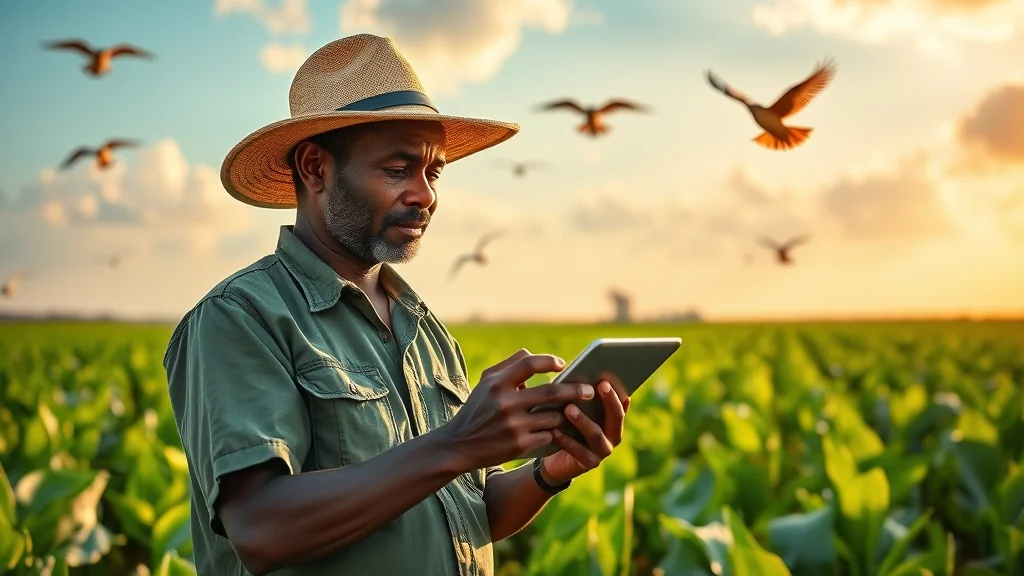
More than anywhere, the Caribbean’s acute exposure to climate shocks—hurricanes, drought, unpredictable rains—makes the case for bundled agricultural lending solutions: rapid credit, timely input delivery, crop insurance, and advisory services delivered as an integrated package, not standalone products. Here, pure credit isn’t enough; it’s the combination that makes the difference.
After each major storm, the bottleneck isn’t lack of community bank willingness but their glacial loan renewal cycles and the impossibility for farmers to replenish seeds or replace damaged equipment before the next planting window closes. Agri-fintech solutions positioned for this region focus on rapid disaster response—delivering capital, supplies, and insurance in days. Export-oriented farmers, crucial for foreign exchange and local livelihoods, now see these bundles as essential rather than optional. As Betty Mureithi of Mercy Corps AgriFin notes, “The bundles are the future—credit alone is not enough for today’s agricultural producers. ”
“The bundles are the future — credit alone is not enough for today’s agricultural producers.” – Betty Mureithi, Mercy Corps AgriFin
What to Watch: Signals on the Agricultural Credit Digital Lending Radar
So where does that leave us—fintech founders, ag lenders, policymakers, and investors looking for the next wave of opportunity or risk? In this space, signals matter more than slogans. Here’s what deserves your attention:
-
Commercial bank partnerships are warming up. The IFC expects a real surge in agri-fintech co-lending within 1–3 years. The big question: which community banks and mainstream lenders will trust—and scale with—these new platforms first?
-
Regulation of alternative credit scoring and AI-driven decisions is intensifying. Kenya’s Office of the Data Protection Commissioner is only the first of many. Expect scrutiny of how algorithms shape who does or doesn’t get farm credit.
-
Bundled solutions (credit + input + insurance) are coming to dominate. Single-product lending is out; platforms that combine credit with insurance, inputs, and market access—not just loans—are already edging out competitors.
-
Index insurance and weather-triggered lending move from pilot to practical. Platforms like Pula, with 20M+ farmers insured, are making climate-smart products real, not theoretical. Watch for Caribbean and Pacific pilot programs to scale fast.
-
First-mover wins in the Caribbean are on the table. The SIDS market remains a major white space. Ag lender boards of directors, don’t expect a stampede—expect one winner, for now, that tailors bundles to hurricane cycles and export crops.
|
Agri-Fintech |
Country |
Farmers Served |
Core Service |
|---|---|---|---|
|
Apollo Agriculture |
Kenya/Zambia |
350,000+ |
AI loan scoring, bundled advisory |
|
EMATA |
Uganda |
20,000+ |
Value chain digitization, input loans |
|
Babban Gona |
Nigeria |
100,000+ |
Portfolio dashboard, co-lending |
|
Farmerline |
Ghana |
200,000+ |
Credit monitoring, digital records |
|
Pula |
Africa |
20M+ insured |
Crop insurance integration |
Video Explainer
Frequently Asked Questions About Agricultural Credit Digital Lending
-
How does agricultural credit digital lending differ from traditional ag lending?
Digital lending leverages mobile phones, AI, and alternative data to assess creditworthiness and disburse loans far more rapidly than traditional bank processes, which typically require collateral, extensive paperwork, and months of due diligence. In the digital model, transactional and farm data—not just balance sheets—determine farm credit access, opening doors for previously invisible smallholder farmers. -
Why do community banks and ag lenders hesitate to embrace digital transformation?
Many community banks and ag lenders view the sector as high-risk, with agricultural lending perceived as vulnerable to unpredictable cash flow, unsteady input costs, and difficult-to-assess credit risk. Technology can help—but only when boards of directors commit to investing in new systems and trust alternative risk assessments built on field reality, not just theory. -
Can digital platforms actually close the farm credit gap for all agricultural producers?
Not yet—for most, digital platforms are only as good as their ability to reach into rural blackspots, build genuine data trails, and integrate rapid logistics. In areas with sound mobile networks and supporting agriculture infrastructure, agricultural credit digital lending delivers. But systemic gaps in connectivity, gender equity, and regulatory clarity still leave millions excluded. -
What are the main risks for farmers using these new lending platforms?
Chief risks include over-indebtedness, poor timing of input or credit delivery, data privacy vulnerabilities, and, for some, being priced out by interest rates or denied access because algorithms still favor urban farmers or those already digitalized. Responsible ag lending and ongoing monitoring remain essential.

Key Takeaways: Lessons for Ag Lenders, Policymakers, and Founders
-
Data is now the core asset: Credit flows where records exist—and fintechs that can mine rural data responsibly win both trust and market share.
-
Fast digital loans matter, but only if coupled with timely input delivery and on-ground support. Don’t neglect logistics for the mirage of scale.
-
Over-indebtedness risk is real: Repayment rates are not a stand-in for farmer well-being, and measurement must reflect lived realities, not just balance sheets.
-
The next frontier is bundled, climate-smart, and context-adapted agricultural lending. Climate risk, insured harvests, and IoT-driven advisory will set the new benchmark for ag lenders and innovators.
Ready to Reimagine Agricultural Credit Digital Lending?
-
Explore how your organization can pilot bundled agri-fintech solutions—or partner with proven innovators in emerging markets.
Agricultural credit digital lending is not a silver bullet, but neither is it a mirage. The winners—farmers, ag lenders, or tech founders—will be those who stay stubbornly close to ground truth, measuring impact not with repayment stats alone, but with the long-term prosperity of the people who feed the world.