Agriculture, forestry, and land use together account for roughly one-fifth to one-quarter of global greenhouse gas emissions, yet this same sector holds enormous potential to drive climate solutions.
As climate change intensifies droughts, floods, and heat stress across global food systems, climate-smart agriculture policies are gaining traction worldwide. These frameworks aim to increase productivity, strengthen resilience, and reduce emission intensity—while safeguarding rural livelihoods and food security.
In 2026, policy innovation is accelerating. Countries are integrating conservation incentives, precision agriculture tools, soil carbon strategies, and resilience funding into national development plans. While results vary across regions, evidence from conservation programs and pilot initiatives demonstrates meaningful gains in soil health, input efficiency, and emission intensity reductions. The urgency is clear: the food system must adapt and, it must decarbonize.
Unveiling the Numbers: Why Climate Smart Agriculture Policy Is Urgent in 2026
As we head into 2026, the urgency behind climate smart agriculture policy has never been clearer. According to the Food and Agriculture Organization, agriculture both shapes and is shaped by the impacts of climate change. With rising temperatures, extreme weather events, and shifting rainfall patterns, food security and rural livelihoods are increasingly at risk. In the last decade, the global food system has seen disruptions from droughts, heatwaves, and floods are all fueled by greenhouse gas emissions and environmental decline. This makes policy intervention not just important but absolutely vital.
Recent data highlights that countries investing in smart agriculture and sustainable agriculture practices have reduced their agricultural greenhouse gas emissions by up to 20% compared to those with static, traditional policies. This shift doesn’t just benefit the climate it enhances soil health, boosts water quality, and improves resilience against future shocks. In 2026, the push for climate smart agriculture policy is supported by new advancements in precision agriculture, incentive structures, and global partnerships that recognize the interconnected nature of food systems, natural resources, and climate. The time to act is now, because the choices made today will echo across generations and define whether we can adapt to and mitigate the impacts of climate change.

- What You’ll Learn in This Guide to Climate Smart Agriculture Policy
- The meaning behind climate smart agriculture policy and why it’s crucial now
- Key strategies shaping climate smart policy in leading countries
- How these policies improve food security, reduce greenhouse gas emissions, and protect soil health
- Challenges that nations and farmers face in adopting climate smart practices
- Actionable steps for policymakers and producers in 2026
Understanding Climate Smart Agriculture Policy: Definitions and Goals
Understanding the core principles behind climate smart agriculture policy is essential for anyone invested in the future of global food systems. Unlike traditional approaches, climate smart agriculture policy is holistic; it takes into account environmental sustainability, economic growth, and social equity. These policies, backed by organizations like the United Nations and the Food and Agriculture Organization, aim to enhance resilience against the impacts of climate change while ensuring food security and reducing gas emissions from agriculture. Let’s explore what makes smart agriculture so ‘smart’ in today’s context.
In 2026, these policies have evolved from theoretical ideas to practical roadmaps influencing both local farmers and national governments. Their core goal is adaptation and mitigation: helping farming communities adapt to current climate changes while actively reducing greenhouse gas emission rates. This dual approach is the reason why climate smart agriculture increasingly appears at the center of sustainability and economic policy discussions worldwide. By weaving together risk management, sustainable agriculture methods, and inclusive incentives, climate smart policy provides a template for future-ready food systems.
Defining Smart Agriculture and Climate Smart Initiatives
Smart agriculture uses cutting-edge technologies and science-based solutions to increase productivity and reduce negative environmental impacts. In a climate smart context, this includes everything from using drought-resistant crop varieties and precision irrigation to integrating renewable energy systems and digital data platforms that track crop growth, soil health, and gas emissions. Climate smart initiatives refer to structured projects and policy tools that advance this vision: they bridge global policy with on-the-ground action, encouraging broad adoption of climate resilient and sustainable agriculture practices at every scale.
Ultimately, the transition from traditional to climate smart agriculture is about more than just adopting technology it’s about reimagining the entire food system. This means building farmer capacity, creating enabling regulatory frameworks, and aligning public and private sector interests toward a common climate benefit. In 2026, smart agriculture initiatives both large and small demonstrate real results, with evidence from diverse regions showing the positive impact on yields, soil quality, and water efficiency. Smart agriculture policies help reduce greenhouse gas emissions while unlocking long-term economic opportunities for rural communities.

Objectives of Climate Smart Agriculture Policy in Responding to Climate Change
The primary objectives of climate smart agriculture policy revolve around three interconnected goals: sustainably increasing agricultural productivity and incomes; adapting and building resilience to climate change; and reducing and/or removing greenhouse gas emissions wherever possible. By targeting these priorities, climate smart agriculture policy supports the long-term health and efficiency of the food system, from the farm level to global supply chains.
More specifically, these policies focus on practices like improved crop rotation, water conserving irrigation, agroforestry, organic soil management, and promoting carbon sequestration. In developing countries, robust smart agriculture policy is especially vital, as smallholder farmers face growing risks from climate variability. Globally, the policy shift toward climate smart agriculture is also aimed at enabling countries to meet ambitious emission reduction targets while ensuring that progress on food security and sustainable development continues. In 2026, these objectives sit at the heart of many national adaptation and mitigation strategies, reinforcing the notion that smart agriculture is not a luxury, but a necessity for a sustainable future.
The Role of Climate Smart Agriculture Policy in Addressing Climate Change
Climate change remains one of the greatest threats to global agriculture, food security, and natural resources. As a result, climate smart agriculture policy is increasingly recognized as a strategic tool for both adaptation and mitigation. These policies propose a complete reimagining of food production, integrating environmentally responsible practices that can scale in response to climate challenges. In 2026, the global consensus is clear: robust, well-implemented smart agriculture policy is the linchpin to achieving greenhouse gas emission reduction targets and preserving food security for billions of people.
Countries worldwide are facing more frequent climate extremes, and their agricultural policies must evolve if they are to weather these changes. Climate smart agriculture policy addresses not only the technical needs like improved agronomic practices and GHG emission controls, but also the social and economic challenges that come with transitioning toward a sustainable, climate resilient food system.
Impacts of Climate Change on Agriculture and Food Security
The impacts of climate change on the agricultural sector are profound and multifaceted. Prolonged droughts, erratic rainfall, and heatwaves threaten food security, especially in regions where food production is already vulnerable. Soil health declines as extreme weather erodes topsoil and disrupts natural nutrient cycles. Global food systems reliant on monoculture are particularly exposed, putting millions at risk of hunger. In response, climate smart agriculture policy aims to buffer these threats by promoting innovation, diversification, and ecosystem stewardship at every level.
This policy approach not only provides adaptation strategies like stress-resistant crops and diversified farm systems but also delivers proven pathways for reducing future greenhouse gas emissions. Studies show that farms using smart agriculture techniques see significantly improved yields, water quality, and resilience, even as they lower their carbon footprints. For smallholder farmers in developing countries, these policies provide vital tools for managing risk, building capacity, and escaping poverty traps when faced with the impacts of climate change.
Reducing Greenhouse Gas Emissions through Smart Agriculture Policy
One of the clearest benefits of climate smart agriculture policy is its ability to directly reduce greenhouse gas emissions from the agricultural sector. This is achieved through practices such as no-till farming, managed grazing, cover cropping, efficient fertilizer use, and targeted water management each designed to cut emissions at the source. These approaches not only reduce direct gas emissions but also stimulate greater carbon sequestration, ensuring agriculture acts as a sink not just a source of carbon dioxide and other GHGs.
Policy frameworks encourage the use of advanced monitoring tools to track emissions, promote financial incentives for emission reduction practices, and mandate environmental reporting for large-scale producers. The integrated focus on both emission reduction and climate resilience is setting new standards in sustainable agriculture, positioning smart agriculture as a viable long-term solution to the climate crisis. By 2026, countries leading in the adoption of these frameworks demonstrate significant progress in meeting international targets set by agreements like the United Nations’ Sustainable Development Goals.

Promoting Carbon Sequestration and Improved Water Quality
Carbon sequestration is a key pillar of climate smart agriculture policy, focusing on maximizing the amount of carbon that can be stored in soils and plants rather than released into the atmosphere. Techniques like agroforestry, conservation tillage, and perennial cropping help lock carbon into the soil, simultaneously enhancing soil health and boosting productivity. Improved water quality is another parallel goal, achieved through better management of runoff, minimized use of agrochemicals, and the adoption of natural resource conserving practices across food systems.
Encouraging these practices requires targeted policy incentives, farmer education, and widespread access to monitoring technologies. By synergizing soil carbon management with water protection strategies, smart agriculture policies not only lower emissions, but also address pressing public health and ecosystem services concerns. Innovative pilot projects and national programs continue to demonstrate the dual climate and environmental benefits these approaches provide, offering scalable models for developing countries and advanced economies alike.
Core Components of Climate Smart Agriculture Policies Gaining Traction
Smart agriculture and climate smart policy frameworks gaining traction in 2026 are defined by their comprehensive, integrative approach. They encourage sustainable agricultural practices, technological innovation, and robust risk management to build resilience at every step of the supply chain. Unlike piecemeal solutions, these policies are designed to address entire systems, recognizing the linkages between soil health, food security, water quality, and emission reduction. At their core, they prioritize both short-term and long-term benefits, supporting both farmers’ livelihoods and the sustainability of natural resources worldwide.
Key features include support for inclusive decision-making processes, cross-sector partnerships, and digital technologies that enable more efficient, precise, and transparent farming. These components work hand-in-hand to achieve the broader objectives set out by international organizations and national governments alike ensuring that policy keeps pace with rapidly evolving challenges and opportunities in agriculture.
Sustainable Agriculture Practices Encouraged by Climate Smart Policies
One major goal of climate smart agriculture policy is to accelerate the adoption of sustainable agriculture practices that build resilience and drive emissions reduction. These practices range from diversified crop rotations and integrated pest management to organic soil amendments and water-efficient irrigation systems. Each is chosen for its dual potential to buffer farms against unpredictable climate events while enhancing productivity and profitability over time.
Successful smart agriculture relies on science-based best practices, many of which are proven to restore degraded land, improve nutrient cycling, and support robust rural economies. Incentivizing these transitions often means providing technical guidance and financial support for farmers, especially in developing countries where barriers to change can be high. By 2026, more nations have begun to link these sustainable approaches with mainstream economic development and food security strategies, ensuring climate smart agriculture policy has roots at every level of the food system.
Integration of Technology in Smart Agriculture and Climate Smart Approaches
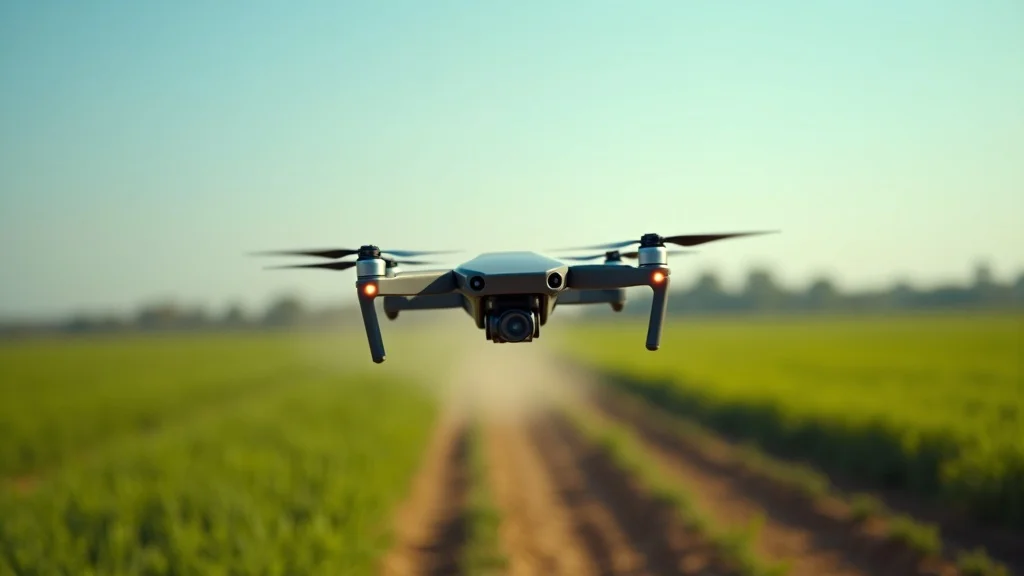
Technology integration is a cornerstone of modern climate smart agriculture policy. Drones, remote sensors, satellite imagery, and artificial intelligence now enable real-time monitoring of crop health, soil conditions, and water use, which can drastically reduce greenhouse gas emissions by improving efficiency across the food supply chain. These technologies streamline decision-making, helping farmers precisely target interventions—minimizing waste and maximizing yield.
Digital platforms also make it easier for policymakers and industry stakeholders to track progress, verify sustainable practices, and ensure compliance with climate targets. In many leading countries, investments in smart irrigation, automated machinery, and weather forecasting systems are now standard features of smart agriculture initiatives. By bridging the digital divide and fostering innovation ecosystems, these policy tools ensure that every farmer, regardless of size or location has access to the tools they need to thrive in a changing climate.
Supporting Food Security through Resilient Policy Design
At heart, climate smart agriculture policy is a direct response to the challenge of safeguarding food security under rapidly changing climate conditions. This means stress-testing agricultural policies against emerging risks and revising them to ensure they promote resilient livelihoods and stable food supply chains. Smart agriculture fosters robust policy design by promoting diversified production, local value chains, and inclusive risk management tools like insurance, early warning systems, and climate adaptation funds.
For rural communities and small-scale farmers, resilient policy design means more than just surviving climate shocks, it enables them to thrive by accessing new markets, adopting sustainable practices, and benefiting from climate benefit initiatives. As food security grows in strategic importance, climate smart agriculture policy continues to reshape national development plans, ensuring healthy diets and economic opportunity for all while progressing towards international sustainability and emission reduction commitments.
Comparing Climate Smart Agriculture Policies Across Leading Nations
Global momentum around climate smart agriculture policy is evident in the diversity and ambition of national approaches in 2026. Countries are tailoring their policies to fit their unique ecological, social, and economic contexts. Advanced economies like the United States prioritize innovation and large-scale incentive programs, while developing countries focus on building capacity, supporting smallholders, and connecting local needs to international support mechanisms. The exchange of best practices is further strengthened by global organizations such as the United Nations and its specialized Food and Agriculture Organization. Below is a comparative overview of top-performing countries leading the way in smart agriculture policy:
| Climate Smart Agriculture Policy Initiatives by Country (2026) | |||
| Country | Key Policy Initiatives | Verifiable Policy Benchmark | Notable Outcomes |
|---|---|---|---|
| United States | EQIP, Conservation Stewardship Program, Soil Carbon Initiatives | Over 23,000 climate-focused conservation contracts funded by the Inflation Reduction Act, covering 11 million acres in fiscal year 2024 | Improved soil health, reduced input costs, expanded conservation coverage |
| Brazil | ABC+ Low Carbon Agriculture Plan, Integrated Crop-Livestock-Forestry Systems | The ABC+ Plan targets 72.68 million hectares of sustainable production by 2030 | Pasture restoration, reduced deforestation pressure, carbon sequestration gains |
| India | PM-KUSUM Solar Irrigation Scheme, Climate-Resilient Smallholder Funds | 5.4 lakh solar pumps installed as of October 2024, representing 42% of the national target under Component B | Reduced diesel dependency, lower irrigation costs, improved water efficiency |
| Germany | 2030 Organic Strategy, Digital Farm Traceability, Federal Organic Farming Scheme | National strategy targets 30% of farmland farmed organically by 2030, currently at 11.2% | Market transparency, reduced synthetic inputs, biodiversity improvements |
| Kenya | Kenya Climate Smart Agriculture Project (KCSAP), National Adaptation Plan | KCSAP directly benefits 522,000 smallholder farming households, with a national NDC target of 32% emissions reduction by 2030 | Enhanced food security, farmer resilience, reduced GHG emission intensity |
Policy Successes: Reducing Greenhouse Gas Emissions and Enhancing Resilience
Several countries have demonstrated significant success in addressing greenhouse gas emissions through targeted smart agriculture policies. Policy tools such as the United States’ precision agriculture grants, Brazil’s agroforestry incentives, and Germany’s organic agriculture transitions all provide evidence for effective emission reduction and climate adaptation. These successes stem from a blend of regulatory mandates, education, and direct support for adopting best practices in sustainable agriculture. By 2026, these approaches have increased rural resilience, improved food system outcomes, and fostered greater cross-sector collaboration.
Success stories highlight the value of participatory policy design, involving farmers, researchers, and local communities from the outset to ensure measures are both practical and widely adopted. The result is transformed agricultural landscapes: healthier soils, cleaner water, robust food security, and more stable rural economies. This convergence of benefits shows that with strong leadership, adaptive policy frameworks, and dedicated funding, rapid progress is possible.

Challenges and Lessons Learned from Global Policy Implementation
Despite many successes, there remain significant challenges to implementing climate smart agriculture policy on a global scale. Variability in climate, market accessibility, limited technical knowledge, and resource constraints all present barriers—especially for developing countries. Complexity also arises from balancing stakeholder needs: what’s good for environmental sustainability may not always be immediately profitable for farmers, and policy frameworks must evolve to bridge these realities. Strong, ongoing engagement with communities and flexible, adaptable strategies help address these friction points.
Major lessons learned include the value of robust knowledge sharing, dynamic feedback loops, and pilot project scalability. In particular, close alignment between government agencies, NGOs, industry partners, and the private sector delivers better, faster results. Smart agriculture policies succeed best when built on a foundation of transparency, participatory governance, and readiness to adjust based on new evidence or shifting climate risks. These insights are informing future policy cycles as more countries ramp up investment in climate smart strategies to meet the challenges ahead.
Expert Perspective: ‘Climate smart agriculture policy is the foundation for a sustainable, food-secure, and climate-resilient future.’ – Dr. Samantha Li, Agricultural Policy Specialist
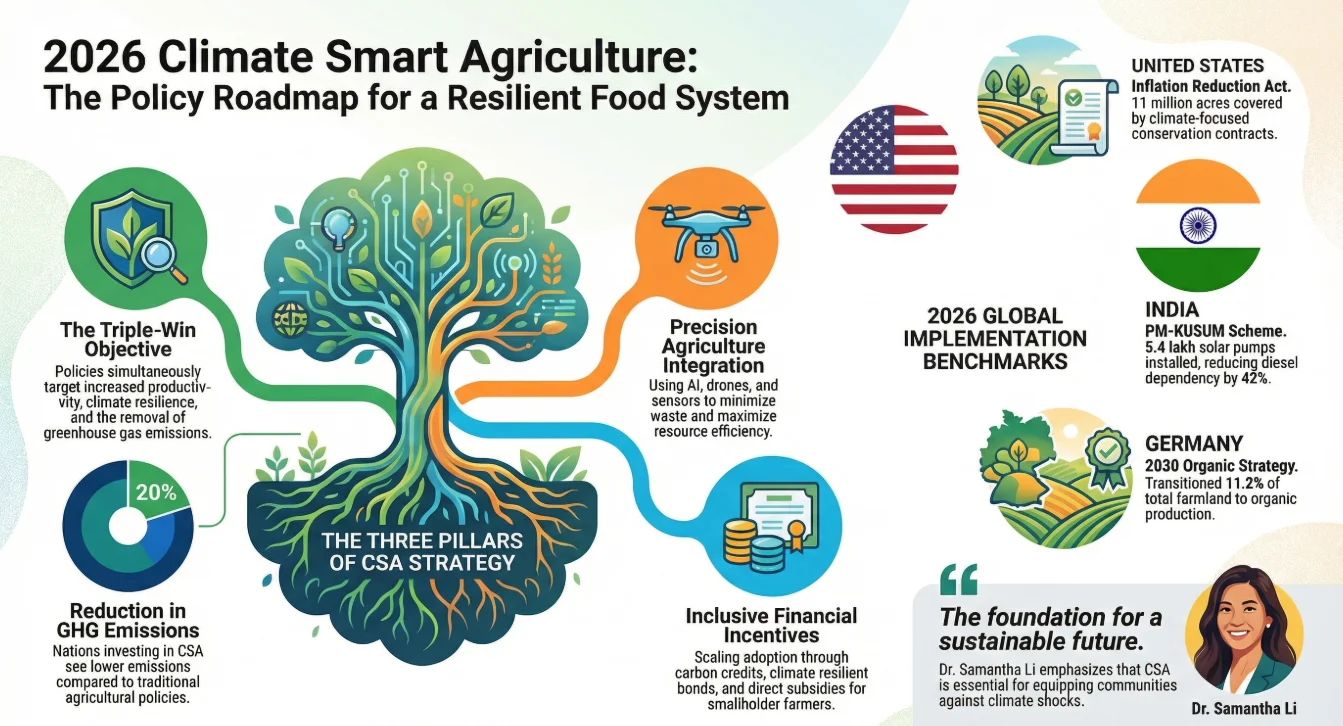
Dr. Samantha Li, a leading expert in agricultural policy, emphasizes the unique interplay between smart agriculture policies and the future of sustainability. According to Dr. Li, climate smart approaches are essential not only for reducing greenhouse gas emissions but also for equipping food systems and rural communities to withstand the shocks of climate change. Her research shows that robust policies and direct investment in innovation are critical for closing the gap between ambitious climate goals and real-world practice. Dr. Li’s perspective is echoed across governments and organizations working to build resilient, climate-protected economies for 2026 and beyond.
Key Drivers Shaping Climate Smart Agriculture Policy in 2026
Several drivers are shaping the rapid evolution and growing adoption of climate smart agriculture policy in 2026. These include technological innovation, shifting stakeholder roles, and innovative funding mechanisms. The convergence of digital agriculture tools with policy support enables accelerated implementation and measurable climate benefit in both developed and developing nations. As governments, private sector players, and farmers each redefine their roles, cross-sector collaboration is flourishing—an essential ingredient for tackling the impacts of climate change and food security challenges at a systems level.
At the same time, creative incentives and finance—from government subsidies to international climate funds—are spurring greater adoption, especially among smallholder producers and climate-vulnerable communities. Ultimately, these drivers are forging a smart agriculture revolution grounded in sustainability, economic opportunity, and climate awareness.
Technological Innovation in Smart Agriculture
Cutting-edge technology stands at the core of climate smart agriculture’s rise. Modern sensor devices, big data analytics, AI-driven crop management, and satellite-based forecasting are just a few tools enabling more efficient, environmentally friendly farming. These smart agriculture technologies reduce inputs, boost yields, and minimize gas emissions, making it easier for farmers to comply with policy guidelines and for governments to measure progress. State-of-the-art research facilities and demonstration projects—which bring new technology directly to producers—are helping bridge the digital divide between advanced and developing countries in 2026.
Research also shows that field-level technology adoption enhances risk management, boosts climate resilience, and fosters better resource stewardship. Farmers equipped with these tools can more effectively monitor soil health, plan irrigation schedules, and optimize nutrient application, all of which help reduce potential negative impacts on climate, water quality, and overall natural resource sustainability.
Evolving Stakeholder Roles: Farmers, Governments, and Industry
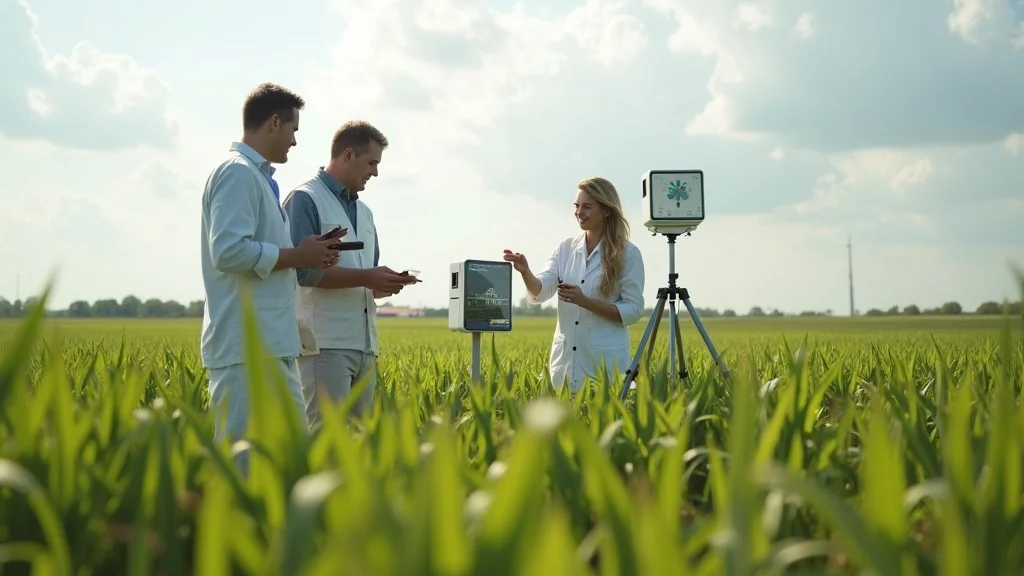
Implementing effective climate smart agriculture policies requires the active involvement and collaboration of farmers, government agencies, industry actors, and civil society. Farmers play a crucial role as on-the-ground innovators and adopters of best practices, but they need strong backing in the form of education, resources, and policy incentives. Governments, for their part, set the enabling frameworks and provide funding, technical support, and regulatory clarity that allow climate smart agriculture to flourish.
Industry, including agritech firms, food processors, and input suppliers, contributes by developing and deploying new technologies, improving supply chain transparency, and providing financial or logistical support to producers. As these roles evolve and intersect, multi-stakeholder platforms and public-private partnerships are becoming more common in 2026, leading to faster innovation and more scalable climate benefit across food systems globally.
Funding Mechanisms and Incentives for Climate Smart Agriculture
Pushing smart agriculture to scale depends on sustained, innovative, and accessible financing. Policy-driven insurance, direct subsidies, carbon credits, and blended finance models are all commonly used incentives in 2026. Innovative funding approaches such as climate-resilient agriculture bonds and concessional loans for green infrastructure enable investment across supply chains, from small farms to large commercial operations.
Global climate finance institutions and national policy banks are prioritizing projects that demonstrate clear emission reduction outcomes, improved water quality, and resilience-building for vulnerable communities. Effective mechanisms are also in place to ensure that funding reaches those who need it most, particularly smallholders, women, and marginalized groups, creating a more inclusive and equitable food system for the future.
People Also Ask: Answers on Climate Smart Agriculture Policy
What is climate smart agriculture policy and how does it differ from traditional agriculture policies?
Climate smart agriculture policy is a forward-looking framework focused on increasing productivity, building resilience to climate change, and reducing greenhouse gas emissions from the food system. Unlike traditional agriculture policies, which often prioritize yield over environmental impact, climate smart approaches consider sustainability, ecosystem health, and rural livelihoods as core objectives. They incorporate adaptation and mitigation strategies, innovation, and multi-stakeholder participation, making them more responsive to 21st-century climate and food security challenges.
How do climate smart agriculture policies help reduce greenhouse gas emissions?
By incentivizing best practices such as reduced tillage, efficient fertilizer management, cover cropping, and precision irrigation, climate smart agriculture policies directly target the main sources of greenhouse gas emissions in farming. These approaches also encourage carbon sequestration in soils and plants, transforming agriculture into a net sink for emissions. Rigorous monitoring, financial incentives, and regulatory alignment further ensure farms adopt sustainable methods that meet both local and global emission reduction goals.

What are the greatest challenges to implementing climate smart agriculture policy globally?
Some major challenges include resource constraints, limited access to technology, differing regulatory environments, and the need for behavior change at the farm level. Variability in climate and market conditions further complicate efforts, especially in developing countries. Effective implementation depends on coordinated investment, strong governance, and ongoing education to ensure that all actors understand and support the transition to smart agriculture practices.
Which countries are leading in adopting climate smart agriculture policies in 2026?
In 2026, leading adopters include the United States, Brazil, India, Germany, and Kenya. These countries have forged ahead with robust policy frameworks, targeted incentives, and research-supported programs to drive innovation and mass adoption. Their experiences provide valuable models for other nations looking to transform agricultural sustainability, food security, and climate resilience.
How do climate smart agriculture policies impact food security and rural livelihoods?
Climate smart policies directly contribute to improved food security by boosting productivity, diversifying crop systems, and protecting farms against climate shocks. They also strengthen rural livelihoods by promoting market access, job creation, and income stability especially for vulnerable groups like smallholders and women. As a result, farmers are better equipped to manage both immediate risks and long-term opportunities in a changing climate.
Watch an in-depth explainer video showcasing climate smart agriculture policy innovations. This animated production features global success stories, action shots of eco-friendly farming across several continents, and easy-to-understand infographics illustrating emissions reduction and technological breakthroughs in smart agriculture.
Best Practices for Implementing Climate Smart Agriculture Policy (2026)
- Prioritize evidence-based, participatory policy design with input from farmers and local communities.
- Establish cross-sector partnerships between governments, private sector, NGOs, and research institutions.
- Invest in technology and knowledge transfer to bridge the innovation gap.
- Develop inclusive financial incentives and risk management tools.
- Continuously monitor, evaluate, and adapt policies based on new data and lessons learned.
FAQs: Key Questions on Climate Smart Agriculture Policy
- How can farmers get involved in climate smart agriculture policy?
Farmers can participate through local associations, government pilot programs, and technology adoption initiatives supported by public and private partners. - What role do consumers play in supporting climate smart agriculture?
Consumers influence markets with their demand for sustainable and climate-friendly products, encouraging further investment in smart agriculture and emission reduction practices. - Are smart agriculture practices more expensive for small farmers?
While initial investments may be higher, incentives and increased yields help offset costs, and many climate smart policies prioritize support for smallholders and marginalized producers. - Do smart agriculture policies guarantee improved food security?
When well-designed and implemented, these policies have a strong track record of boosting food security alongside environmental and economic benefits.
Key Takeaways from the Rise of Climate Smart Agriculture Policies
Climate smart agriculture policy in 2026 is driving systemic change across food systems. By fostering innovation, empowering farmers, and supporting emission reduction and resilience strategies, these policies safeguard food security, rural livelihoods, and the health of our planet. Partnerships, technology, and flexible funding models are all essential ingredients for ongoing success and global impact.
Making an Impact: Steps Forward in Climate Smart Agriculture Policy
To build on current momentum, stakeholders should double down on knowledge sharing, finance for innovation, and participatory policy processes. Expanding best practice adoption and addressing persistent challenges can unlock even greater climate and food security benefits. The road ahead requires collaboration and bold action—but with each step, the world comes closer to a sustainable, food-secure, and climate-resilient future.
Conclusion: Why Prioritizing Climate Smart Agriculture Policy Is Essential for a Resilient Future
In 2026 and beyond, prioritizing climate smart agriculture policy isn’t just a choice—it’s an imperative for a climate-secure, food-sustained, and resilient world. As we invest in smarter strategies today, we lay the groundwork for a safer tomorrow.