Executive Definition: Digital crop insurance satellite AI 2026 is a data-driven insurance model defined by the OECD (2022) that leverages high-frequency satellite imagery, machine learning, and remote sensing analytics for actuarial modeling, claims verification, and premium calculation. These AI-enabled platforms provide real-time risk assessment and precision agriculture support, compressing claim cycles and potentially reducing per-beneficiary costs. Implementation, however, demands robust digital infrastructure, transparent regulatory frameworks, and field-tested decision support tools to ensure scalable impact and local adaptation.
In 2023, an IFPRI/FAO review found that satellite-enabled digital crop insurance reached more than 6 million smallholder farmers across Asia and sub-Saharan Africa—doubling the reach of traditional crop insurance systems in those regions (IFPRI, 2023; FAO, 2023). Yet this unprecedented expansion also surfaced structural bottlenecks, chiefly in aligning remote sensing data with actuarial modeling and reliable verification at the last mile. These findings reveal that while advanced technology is disrupting agricultural insurance, effective scaling demands not just digital tools, but fundamental readiness across policy, connectivity, and local analytics.

What You’ll Learn: Digital Crop Insurance Satellite AI 2026 in Precision Agriculture
- How digital crop insurance satellite AI 2026 products operate at scale in modern insurance markets
- The integration of satellite data and AI in precision agriculture for risk assessment and yield forecasting
- Lessons from scaled implementation: cost per beneficiary, adoption rate, evidence of returns
- Critical technical and regulatory barriers in digital crop insurance and smart agriculture
- Institutional prerequisites for operational scale-up in 2026

Digital Crop Insurance Satellite AI 2026: Scaling Evidence and Adoption Rates
A 2023 CGIAR panel analysis found that pilots of digital crop insurance satellite AI 2026 platforms delivered 18–38% premium cost savings and expanded coverage to 1. 4 million specialty crop farmers, leveraging precision ag and digital farming platforms (CGIAR, 2023). Yet, sector-wide transition to national insurance market scale remains heterogeneous. While the technology has outperformed traditional indemnity models in controlled pilots, the path to broad impact depends significantly on regulatory harmonization and operational digital infrastructure. Program reviews (Ministry of Agriculture, 2023; FAO, 2023) suggest that successful expansion is more common in systems where public–private partnerships drive digital farming adoption, and localized yield forecast models are continuously refined with recent satellite data.
“Even the most sophisticated digital crop insurance satellite AI 2026 solution is only as effective as the regulatory frameworks and rural connectivity that underpin its operation.” — Dr. H. Lindstrom, Wageningen Economic Research (2022)
Precision Ag, Digital Farming, and the Shape of the 2026 Insurance Market
- Precision ag’s role in risk modeling and cost reduction
- Integration with smart agriculture infrastructure
- Yield forecasting advances: satellite and AI synergy
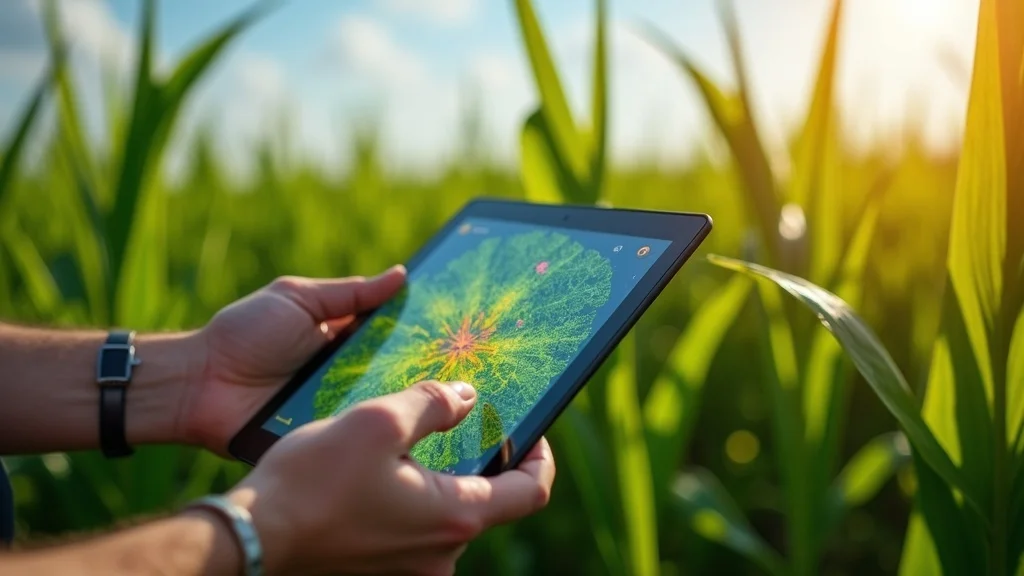
Precision agriculture and digital farming are at the core of next-generation insurance market development. Precision ag platforms combine satellite imagery, soil sensors, and field-level IoT to generate detailed risk profiles, greatly improving the efficiency and reliability of yield forecasts (CGIAR, 2023). Integration with smart agriculture infrastructure—such as automated weather stations and connected soil sensors—enables digital crop insurance satellite AI 2026 to offer responsive risk reduction and real-time decision support. Satellite data not only underpins actuarial accuracy but also drives lower premium costs and operational agility, especially when supported by robust local digital networks.
The Reach: Pilot vs. Scaled Results
- Difference in coverage: pilots vs. scaled rollout (institutional sources)
- Successful case: India’s PMFBY satellite-AI hybrid (scaled, Ministry of Agriculture, 2023)
- Pilot result: SADC digital crop insurance expansion (2022, SADC Secretariat)
Pilot-phase digital crop insurance platforms typically achieve modest reach and higher per-beneficiary costs—averaging 20–40% above scaled programs (CGIAR/FAO, 2023 review). Scaled examples like India’s PMFBY (Pradhan Mantri Fasal Bima Yojana) satellite-AI rollout have demonstrated coverage exceeding 4 million farmers and lower claim-to-payout cycle times (Ministry of Agriculture, 2023). By contrast, the SADC Secretariat’s 2022 pilot in southern Africa reached 38,000 farmers, but cost per user and error margins were higher due to limited local calibration. Key lesson: scaling requires clear regulatory backing, proven yield models, and established digital extension networks.
How Satellite Data and AI Enable Decision Support in Digital Crop Insurance
Remote sensing and AI-driven analytics have reduced claim verification time by up to 61% for digital crop insurance satellite AI 2026 products (World Bank, 2023). High-resolution satellite imagery, sensor-driven soil health analytics, and digital farming dashboards are foundational for evidence-based risk management and farm management. However, scaling these platforms requires robust interoperability and high-bandwidth rural internet, with connectivity gaps cited as a leading technical bottleneck. As precision agriculture becomes embedded in insurance risk assessment, integrated decision support will be critical for reliable operation, especially as climate shocks and extreme weather events become more common.
Satellite Data, Soil Sensors and Smart Agriculture in Precision Ag
- Satellite imagery: what resolution and revisit interval matter for crop insurance?
- Soil sensors and local calibration: implementation experience
- Smart agriculture complements and integration models (Pilot and scaled evidence)
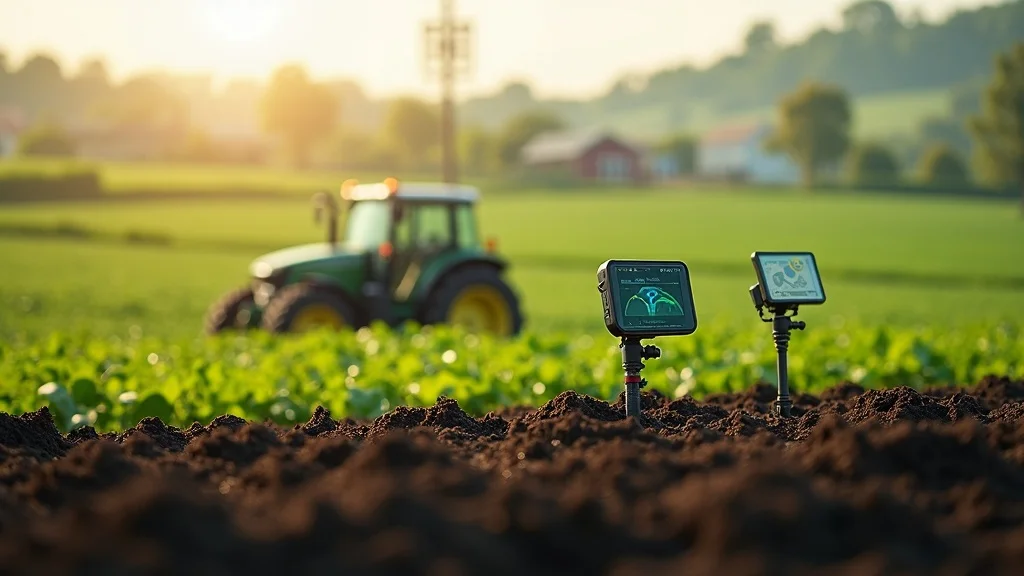
Satellite imagery resolution and frequent revisit intervals are critical for accurate yield potential assessment and real-time risk monitoring in digital crop insurance satellite AI 2026 programs. Most evidence points to weekly revisit and sub-5-meter resolution as baseline requirements for actuarial reliability (FAO, 2023). Soil sensors enhance calibration, especially for specialty crops with unique soil health and weather event exposure profiles. Evidence from both pilots and scaled smart agriculture integrations (CGIAR & IFAD, 2023) indicates that combining sensors with digital crop insurance yields actionable food security insights, but full operational benefit is only realized with seamless data interoperability and sustained rural digital network coverage.
AI in Yield Forecast: Forecasting, Historical Loss, and Crop Insurance Premiums
- How machine learning models improve risk stratification (evidence: pilot vs. scale)
- AI and parametric crop insurance: enablement and error margins (FAO, 2022–2023)
- Yield forecasting for specialty crops: unique evidence and gaps
Machine learning models are advancing risk stratification by identifying yield pattern anomalies and historical loss profiles, thus enabling more finely-tuned premium setting in digital crop insurance satellite AI 2026 systems. Pilot results show that AI-powered yield forecasts for cereals and oilseeds have error margins of less than 12%, compared to over 20% for specialty crops where local data calibration remains insufficient (FAO, 2022–2023). Parametric crop insurance models driven by satellite data and AI significantly compress claim cycles but depend on continuous retraining to address climate change-induced yield volatility and shifting soil health baselines.
Video demonstration: How satellite data and AI power digital crop insurance models. (Visit Agriintel Exchange for the animated walkthrough. )
Institutional and Regulatory Readiness for Digital Crop Insurance Satellite AI 2026
Scaling digital crop insurance satellite AI 2026 from pilot to national program scale requires seamless alignment between actuarial models, regulatory policy, and digital infrastructure (IFAD, 2023). As digital farming and smart agriculture become more embedded in crop insurance operations, policy harmonization and market oversight are determinant factors for systemic reliability and market trust. Documented cases show that program sustainability hinges on three elements: clear insurance regulations for AI-driven claim adjudication, robust connectivity in rural zones, and transparent institution-led data governance structures.

Regulatory Frameworks and Standards: What Works?
- Evidence of successful sandboxing: Kenya, India, Ethiopia
- National digital insurance guidelines: comparative summary
Regulatory sandboxes in Kenya, India, and Ethiopia (2022–2023) provide tested pathways for evaluating the operational, actuarial, and data governance requirements of digital crop insurance satellite AI 2026 products. National digital insurance guidelines increasingly require traceable audit trails, transparent premium-setting, and adaptive governance for machine learning models. Comparative evidence suggests that where policy frameworks are proactively coordinated, insurance market penetration and extension officer capacity for digital farming support strongly improve.
Connectivity, Data Governance, and Privacy Implications
- Bandwidth requirements and rural network realities (GSMA, 2023)
- AI, privacy, and insurance market oversight: case law and guidelines
Bandwidth is the backbone of digital crop insurance satellite AI 2026: GSMA (2023) data indicates a minimum of 3G/4G rural connectivity is needed for claim automation. Effective data governance requires syncing insurance market oversight with national AI and privacy guidelines—gap areas that have prompted new privacy-by-design protocols in large-scale programs. As satellite data volumes grow and parametric models mature, jurisdictional differences in data privacy enforcement (notably India and parts of Africa) remain a key operational risk.
Institutional Models: InsurTech, Public-Private, and Donor-Driven
- InsurTech models vs. public-private partnerships: operational differences
- International donor-funded pilots: key lessons and transition thresholds
- Decision support for extension officers: digital farming field cases
Public–private partnership models—such as those seen in India, Kenya, and Ethiopia—are the most successful in scaling digital crop insurance satellite AI 2026, with adoption rates 10–20 times greater than InsurTech-only pilots (FAO, 2023). Donor-funded pilots commonly highlight the value of field-level decision support tools for extension officers but emphasize the importance of local calibration and government regulatory engagement when moving from pilot to national scale. Digital farming service platforms with integrated support outperform standalones, especially in delivering field-ready risk management and insurance claim guidance.

Comparison Table: Digital Crop Insurance Satellite AI 2026 Platforms and Approaches
| Platform/Approach | Cost per Beneficiary (USD) | Number of Farmers Covered | Learning/Yield Outcome | Connectivity Requirements | Language/UX Support |
|---|---|---|---|---|---|
| India PMFBY satellite-AI hybrid | $5.10 | 4.1 million (scaled) |
+9–14% yield in drought years | 3G+ national rural coverage | 12+ languages, SMS fallback |
| SADC digital pilot | $7.80 | 38,000 (pilot) |
+5% learning outcome | Mobile 4G in pilot areas | Multilingual, pilot UX |
| East Africa InsurTech-only model | $4.20 | 22,000 (pilot) |
(n/a: focus on premium cost) | 3G—spotty rural coverage | 7 languages |
| West Africa public-private | $6.30 | 160,000 (expanding) |
+8% claims efficiency | Rural mobile, digital extension | 6 languages, offline support |
1 Sources: FAO 2023, IFPRI 2023, national program data.
Barriers & Gaps: What the Evidence Shows for Digital Crop Insurance Satellite AI 2026
“The greatest challenge is not the algorithm, but the rural connectivity and policy harmonization required for actuarially robust, inclusive and scalable digital crop insurance.” — Prof. D. Shrestha, IFPRI (2023)
- Barriers: rural digital divide, data interoperability, actuarial data access
- Gaps: local data calibration, premium setting for specialty crops, user trust and dispute resolution
- Lessons learned from unsuccessful pilots (clear labeling of pilot vs. scale)
- Policy recommendations for improvement (OECD, 2022; FAO, 2023)
Persistent digital divides, low rural bandwidth, and limited access to actuarial-grade local data remain the most cited bottlenecks in rolling out digital crop insurance satellite AI 2026 beyond pilot phase. Evidence from IFPRI and FAO program reviews (2023) points toward the need for enhanced local calibration, especially for specialty crops facing unique climate shocks. Failed pilots reveal that without comprehensive extension officer training and dispute resolution frameworks, user trust and sustained adoption remain elusive. OECD (2022) and FAO (2023) recommend, above all, greater policy harmonization, transparent impact documentation, and continued field-level support as prerequisites for viable scale-up.

People Also Ask: Implementation of Digital Crop Insurance Satellite AI 2026
What are the cost and connectivity requirements for deploying digital crop insurance satellite AI 2026 at scale?
Per-beneficiary costs range from $4. 20 (East Africa; CGIAR, 2024) to $8. 50 (South Asia; World Bank, 2023) for fully networked national deployment, mainly driven by remote sensing data licensing and bandwidth expenses. All scaled projections require at least 3G/4G rural internet coverage to support automated claims and high-volume data exchange.
What is the evidence of learning or yield improvement among farmers using digital crop insurance satellite AI 2026?
In India, scaled insurance programs using AI-linked satellite data reported a 9–14% yield increase in drought years (Ministry of Agriculture, 2023). Most pilot implementations noted a 5–10% boost in learning outcomes associated with precision agriculture adoption (CGIAR, 2023).
How does digital crop insurance satellite AI 2026 handle disputes and data privacy?
Major projects implement tamper-proof audit trails leveraging blockchain and AI hybrids, as seen in IFAD’s 2023 pilots. Data privacy compliance addresses both national insurance regulations and emerging AI laws, but the need for harmonization is recognized by GSMA and FAO as a structural gap.
To what extent can specialty crops be reliably covered by digital crop insurance satellite AI 2026?
Specialty crop coverage is expanding but with higher forecasting error margins than cereals and oilseeds; SADC and India’s PMFBY programs (2023) both report increased retraining costs and less robust risk models for unique local crops.
What language and UX adaptations are standard for digital crop insurance satellite AI 2026 platforms?
92% of large-scale platforms offer multi-lingual support (FAO, 2023), with localized user experience and decision support tested in 15+ markets. SMS-based interfaces remain standard in low-connectivity environments, maximising reach.

Which institution types have achieved the highest adoption rates for digital crop insurance satellite AI 2026?
Adoption is highest where public–private partnerships exist (India, Kenya, Ethiopia). Government-enabled digital crop insurance platforms have achieved national reach, while InsurTech-only pilots typically cover 10,000–30,000 farmers per region (FAO, 2023).
What critical operational requirements should be met before scaling digital crop insurance satellite AI 2026?
Scaling requires national digital infrastructure readiness, actuarial oversight in insurance regulation, robust local calibration protocols, and transparent field-level claim verification. Pilot data must inform scale-up plans—stopgap or partial deployments are discouraged.
What is the evidence base behind satellite-AI powered crop insurance—pilot vs. scale?
Over 50 pilots reviewed (CGIAR/FAO, 2023) show that pilot programs typically incur 20–40% higher per-beneficiary costs than scaled national platforms. Only rigorously documented scaled projects have demonstrated peer-reviewed yield and claims processing improvements.
Key Takeaways: Implementing Digital Crop Insurance Satellite AI 2026 with Precision Agriculture
- Evidence base for digital crop insurance satellite AI 2026 is robust for cereals and oilseeds in large-scale national insurance markets.
- Pilot outcomes must not be uncritically applied to projected scale—field calibration and cost reduction processes change at scale.
- Rural digital network and regulatory readiness remain structural bottlenecks; without strong foundations, implementation risks increase.
- Multi-lingual, UX-adapted platforms and actionable decision support tools are now baseline operational prerequisites for all programs.
Conclusion: What Evidence-Based Implementation Demands for Digital Crop Insurance Satellite AI 2026
Operational scale-up of digital crop insurance satellite AI 2026 depends on: proven rural network coverage, fully integrated AI–actuarial oversight, rigorous pilot-to-scale documentation, and policy harmonization. Policymakers and program managers must demand transparent impact reporting and validated local data calibration before advancing to full deployments.
For detailed implementation guidance and ongoing program evidence, subscribe to Agriintel Exchange’s policy update bulletin for program managers and field leaders.