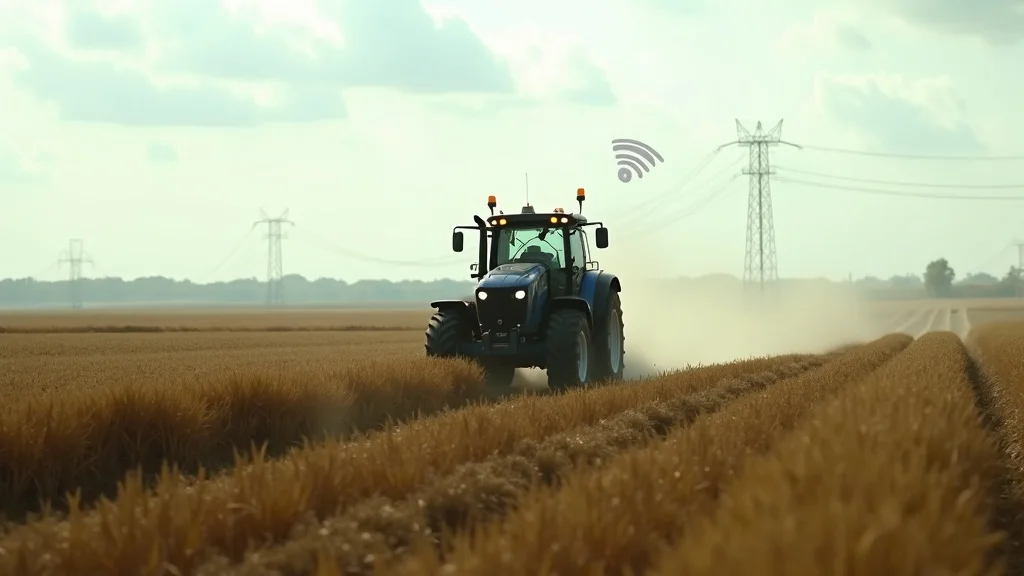
A farm in Sonoma County posted 27 tractor driver positions. Weeks passed without a single application. The owners updated the job listing. The new title was “agtech operator.” The preferred qualification was video game experience. The applications came in. The CEO of ag startup Agtonomy, Tim Bucher, described the shift as opening up a whole new workforce for agriculture. Agriculture Dive
That anecdote captures the dual pressure that is accelerating autonomous machine adoption in commercial agriculture in 2026. Labor availability is declining, particularly for the skilled seasonal and semi-skilled positions that form the operational backbone of field crop and specialty crop production. And the technology available to replace or augment that labor has crossed a threshold in capability and commercial readiness that was not present even three years ago.
Autonomous tractors are operating in commercial fields without drivers. Robotic weeders are pulling weeds in vegetable operations across California’s Central Coast without herbicides or hand crews. Computer vision systems are identifying individual weeds within centimeters of crop plants and executing mechanical removal at speeds comparable to manual labor, but across operating windows that no human workforce can match. The transformation of field operations is no longer a forecast. It is a current commercial deployment story.
Autonomous Tractors: From Assisted Guidance to Full Autonomy
The transition from conventional tractor operation to full autonomy has not been a sudden leap. It has been a staged progression that built on decades of guidance system development before arriving at the current generation of driverless machines.
John Deere has been the most visible commercial actor in this transition. Deere has used automatic steering on its tractors since the 1990s. By 2025, Deere announced its tractors would have full autonomy abilities, with the stated goal of a fully autonomous corn and soy production system by the end of the decade. Agriculture Dive
At CES 2025, John Deere unveiled its second-generation autonomy kit for the 9RX tractor for large-scale agriculture, featuring 16 individual cameras arranged in pods to enable a 360-degree view of the field, allowing farmers to step away from the machine and focus on other tasks. John Deere also unveiled the autonomous 5ML orchard tractor for air blast spraying, featuring added lidar sensors to address the dense canopies found in orchards. PR Newswire
The autonomy retrofit kits include redesigned camera arrays and rugged NVIDIA processing units that work with Blue River Technology’s machine learning algorithms, enabling tractors and other equipment to autonomously navigate fields and make decisions in real-time based on data from 16 stereo cameras providing a 360-degree view of the surroundings. NVIDIA’s Jetson GPUs process this data with durability designed to withstand extreme temperatures down to -40°F. Control Chief
The retrofit approach is commercially significant. As Blue River Technologies CEO Willy Pell said in announcing the kits, farmers should not have to buy a new tractor to access autonomy. The ability to retrofit existing equipment rather than replace the entire capital asset lowers the adoption barrier considerably and extends the addressable market well beyond first-time buyers of new machines.
What Autonomous Tractors Actually Do
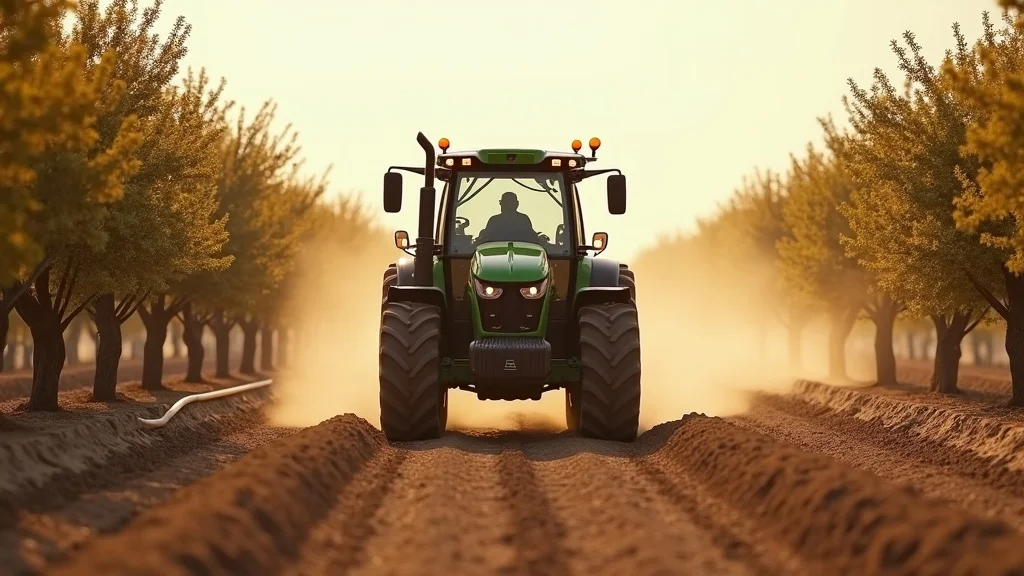
The primary use case driving autonomous tractor adoption in 2025 and 2026 is tillage. Tillage is one of the most time-compressed field operations in crop production: it must be completed within narrow seasonal windows, it is repetitive and taxing for operators over long shifts, and it requires consistent depth and path management that benefits directly from GPS-guided precision.
The appeal of round-the-clock tillage enabled by autonomous systems is a significant advantage for growers when crunch time is on, as machines can run 24 hours a day without operator fatigue constraints. Agriculture Dive A single autonomous tillage tractor running continuously through a narrow spring window can cover more acres than a two-shift manned operation, without the labor management overhead.
The expansion of autonomy beyond tillage is following a predictable pattern: tasks that are repetitive, spatially defined, and operable at lower speed with predictable obstacle environments are getting automated first. Spraying in orchards, where the machine follows defined row paths and must navigate canopy density rather than random field obstacles, was the next application. John Deere added lidar sensors to its orchard autonomy kit to address the challenge of dense tree canopies, which can be up to 30 feet tall and create problems for traditional GPS-only navigation. Farm Progress
The market growth projections behind autonomous tractor deployment reflect commercial conviction in the technology’s trajectory. Analysts estimate the U.S. autonomous farm equipment market will grow from approximately $25.8 billion in 2024 to over $46.6 billion by 2034, at a CAGR of about 6 percent. In the autonomous tractor segment alone, the U.S. market could rise from $1.7 billion in 2023 to $9 billion by 2033, growing at nearly 18 percent annually. Global autonomous tractor market projections put the figure at $2.7 billion in 2025, expanding to $12.45 billion by 2032. Tractor Tuesday Blog
The Labor Problem That Is Driving Adoption
The business case for autonomous field machinery is rooted in a structural problem, not a cyclical one. Agricultural labor availability has been declining across major production regions for years. The trend is driven by demographic shifts in rural populations, regulatory changes affecting seasonal labor access, and a generational preference among younger workers for urban employment.
John Deere’s autonomous technology development is explicitly positioned to address labor shortages in agriculture, both domestically and globally, by enabling equipment to operate without a human driver, alleviating some of the pressures that modern farming faces due to the scarcity of labor. Control Chief
The skill shortage is in some ways more acute than the raw labor shortage. Operating modern farm equipment, with its GPS guidance systems, variable rate controllers, telematics systems, and agronomic decision support platforms, requires a different skill set than traditional tractor driving. Finding operators who can manage precision agriculture technology at scale is difficult in tight labor markets. Autonomous systems that can be monitored remotely via mobile app shift the skill requirement from machine operation to system management, which is a role that, as the Sonoma County example illustrates, attracts a different and in some cases broader candidate pool.
Robotic Weeders: The Herbicide Alternative That Is Now Commercially Real
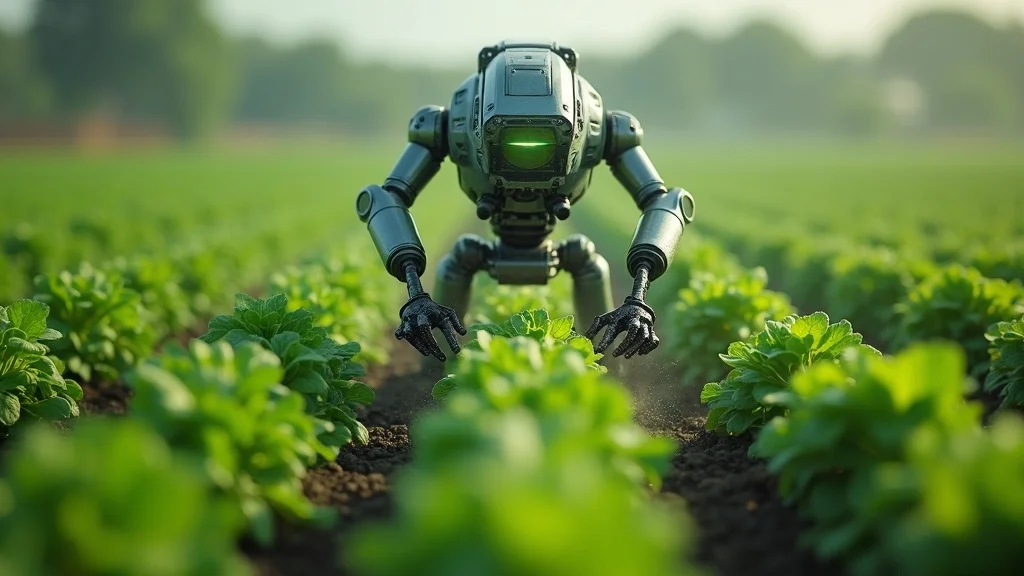
The robotic weeding segment has moved from prototype demonstration to commercial field deployment in vegetable and specialty crop operations, and is beginning to scale into row crop applications. The technology addresses two problems simultaneously: labor cost for hand weeding and herbicide cost for chemical control.
Weeds cost global agriculture more than $150 billion annually in lost yields. They drive a $34 to $42 billion annual global herbicide spend. Herbicide-resistant superweeds now affect more than 500 species across 92 countries. The USDA reported in 2022 that resistant weeds cause roughly 30 percent annual crop losses in the Americas. RobotToday
The chemical solution to weed management is failing on two fronts simultaneously. Resistance is structural, not cyclical. More than 500 weed species resist at least one active ingredient. Waterhemp and Palmer amaranth resist seven or more herbicide sites of action simultaneously. New herbicide modes of action take 10 to 15 years and hundreds of millions of dollars to develop. RobotToday Meanwhile, regulatory pressure on herbicide use is tightening in the EU and in several U.S. states. The economics of continued herbicide-first weed management are deteriorating precisely as robotic alternatives are becoming commercially viable.
Robotic weeders employ advanced technologies such as computer vision, AI, and mechanical tools to autonomously or semi-autonomously navigate through crops, identify weeds, and execute targeted removal. The overarching goals are to enhance weed control efficiency, minimize reliance on herbicides, and reduce the need for manual labor in agricultural operations. NC State Extension Publications
The Commercial Platform Landscape
Four robotic weeding platforms have reached commercial-scale deployment or late-stage commercialization as of 2025 and 2026. They represent different crop types, farm sizes, and weed control philosophies.
FarmWise, founded in 2016 and operating commercially in California’s Salinas Valley and Central Coast vegetable operations, uses mechanical intra-row weeding. Its Vulcan platform targets individual weeds within millimeters of crop plants using machine learning-driven computer vision and mechanical actuators that cut weed roots without using herbicide. The company pioneered the service model for agricultural robots, charging farmers per acre rather than requiring capital equipment purchase, which significantly lowers the adoption barrier. Dr. Steve Fennimore, a weed scientist at UC Davis, observed FarmWise operations in a lettuce field and reported the weed control was excellent and the crop unharmed. The Robot Report
Carbon Robotics takes a different approach to weed control. Its LaserWeeder uses high-powered laser arrays to destroy individual weeds on contact, with AI-driven targeting that distinguishes crop plants from weeds in real time. Carbon Robotics has raised over $97 million in funding from backers including NVIDIA Ventures, Sozo Ventures, and Anthos Capital, and is expanding from specialty crops into corn and soybeans in 2025, roughly tripling its total addressable market. RobotToday
Ecorobotix, a Swiss company, operates on a micro-dosing model. Its ULV spraying system identifies individual weeds and applies micro-doses of herbicide to each plant, reducing total herbicide volume by up to 95 percent compared to broadcast application while maintaining effective weed control. This approach does not eliminate chemical inputs but dramatically reduces them, which is a commercially important distinction in contexts where full mechanical removal is not yet practical at scale.
John Deere’s See & Spray system, developed through its Blue River Technology subsidiary acquired in 2017 for $305 million, brings targeted herbicide application to large-scale row crop production. The system uses computer vision to identify green plant tissue against bare soil and applies herbicide only to detected weeds, reducing application volume substantially compared to broadcast spraying.
The Economics of Robotic Weed Control
The economic case for robotic weeders varies significantly by crop type, labor cost, and weed pressure. It is strongest in specialty crops and organic production, where hand-weeding labor costs are highest, herbicide options are most restricted, and the per-acre value of the crop supports higher technology operating costs.
FarmWise is strongest in the organic segment, where no herbicide cost means mechanical cultivation economics are particularly compelling, and its AI-guided system targets individual weeds within centimeters of crop plants, a precision previously only achievable by skilled hand crews. RobotToday
For conventional row crop production, the economics are more nuanced. The adoption driver is increasingly herbicide resistance rather than labor cost. When a field has weed populations with known resistance to multiple herbicide classes, the robotic alternative is not competing against a $12-per-acre herbicide application. It is competing against a weed management failure that is generating 30 percent yield losses. In that context, a robotic weeder at $40 to $80 per acre operating cost begins to look like risk management rather than a technology premium.
Operational Realities: What Farms Need to Know
Autonomous tractors and robotic weeders are real commercial products, but they are not yet universal solutions applicable across all farm types without qualification.
Autonomous tractors in their current commercial generation perform best in open-field row crop environments with well-defined field boundaries and minimal unpredictable obstacles. Orchard environments add navigation complexity that John Deere has addressed with lidar, but the technology is still newer in specialty settings than in broadacre tillage.
Robotic weeders perform best when row spacing is consistent with the platform’s configuration, when crop uniformity is high enough for the vision system to establish clear crop-versus-weed distinctions, and when the weed spectrum in the field matches the weeds the system’s model has been trained on. Calibration to local conditions matters for accuracy.
The potential tension between autonomous round-the-clock tillage and the growing momentum of the no-tillage movement, which has gained traction as a more sustainable agricultural practice, is worth noting. Operators considering autonomous tillage adoption should evaluate their soil health management context alongside the operational efficiency gains. Agriculture Dive
Connectivity is a practical dependency for both technology categories. Autonomous tractors rely on GPS correction signals, remote monitoring infrastructure, and cloud-based telemetry. Robotic weeder platforms require data connectivity for over-the-air model updates that improve weed detection accuracy over time. Operations in areas with poor rural broadband coverage need to evaluate connectivity solutions before committing to platform deployment.
What 2026 Looks Like on the Ground
The clearest picture of where autonomous field machinery is in 2026 comes from looking at where commercial deployments are concentrated. Large-scale row crop operations in the U.S. Midwest are the primary adopters of autonomous tillage and planting systems. California’s Salinas Valley and Central Coast remain the leading commercial zone for robotic weeders in vegetable production. Orchard spraying autonomy is in active commercial deployment in California’s tree nut and wine grape regions.
The pattern that is forming is one of geography-led and crop-led adoption rather than uniform sector-wide uptake. The regions and crop types that have the most acute labor constraints, the highest input costs, or the most severe herbicide resistance problems are adopting first, which is exactly the adoption sequence that signals genuine rather than promotional commercial viability.
Startups like Bonsai Robotics aim to deploy vision-based autonomous harvesters in orchards, especially for nuts, having raised $15 million to scale operations. The full vision shaping the next phase of farm machinery development is one where driverless machines, drones, AI-powered diagnostics, precision sprayers, and harvesters all work in concert. Tractor Tuesday Blog
That integrated machine ecosystem is not yet the operating reality on most commercial farms. But the individual components are commercially deployed, the investment behind scaling them is substantial, and the structural labor and resistance problems driving adoption are not going away. The machines are taking over field operations not because they are the preferred option, but because in many operating contexts, they are becoming the most reliable one.
Deployment Stories: Farm Equipment Case Studies and Field Results
Field stories in 2026 provide unmatched technical context, tracking autonomous solution deployments from controlled trial to full-scale commercial adoption. From California’s nut and tomato heartland to Midwest grain plots, progressive farmers, university researchers, and equipment manufacturers such as CNH Industrial and Carbon Robotics have actively contributed to field-proven data on ROI, performance, and operational pitfalls—offering a nuanced alternative to vendor claims.
On-site drone and ground-level footage of autonomous tractors and robotic weeders show these fleets navigating complex field layouts, interacting with each other, and executing task-switches (tillage, spraying, weeding) with minimal downtime. Operator feedback from Ag Expo and independent benchmarking panels highlights substantial labor hours saved and, in several cases, yield stability improved by the precision of machine-driven interventions. While not universally flawless, the data suggests a strong, crop- and region-specific case for investment—if procurement timing aligns with regulatory and vendor support cycles.
FAQs
What is an autonomous tractor and how does it work? An autonomous tractor is a field machine capable of navigating and operating without a human driver in the cab. Commercial systems use combinations of GPS, computer vision cameras, lidar, and AI processing to detect field boundaries, avoid obstacles, maintain row tracking, and adjust implement depth in real time. Operation is monitored remotely via mobile app or farm management software.
Which companies offer commercial autonomous tractors in 2026? John Deere leads the commercial market with its 8R and 9RX autonomous systems and retrofit autonomy kits applicable to several tractor lines. CNH Industrial offers electric and autonomy-ready models through its Case IH and New Holland brands. Monarch Tractor produces a 40-horsepower electric autonomous-capable platform suited to specialty and vineyard operations. Agtonomy provides autonomy software integrations for multiple hardware platforms.
What is a robotic weeder and how is it different from a precision sprayer? A robotic weeder is a machine that identifies and removes weeds autonomously using computer vision, AI, and either mechanical actuators or targeted energy delivery such as lasers. It differs from a precision sprayer in that mechanical weeders and laser systems require no herbicide at all. Precision sprayers that use AI targeting, such as John Deere’s See & Spray, still apply herbicide but only to identified weed plants rather than broadcasting across the entire field.
What crops and operations are best suited to robotic weeders currently? Robotic weeders are most commercially deployed in specialty vegetables, organic crops, and vineyards, where hand-weeding labor costs are highest and herbicide options are most restricted. Expansion into row crop applications for corn and soybeans is advancing, driven primarily by herbicide resistance in Palmer amaranth and waterhemp populations.
How much can robotic weeders reduce herbicide use? Results depend on the platform and weed pressure. Micro-dosing systems like Ecorobotix report herbicide volume reductions of up to 95 percent compared to broadcast application. Mechanical systems like FarmWise eliminate herbicide in treated areas entirely. John Deere’s See & Spray system achieves reductions by applying only to detected weed plants, with exact reduction percentages varying by weed density in the field.
What is the autonomous farm equipment market size? The U.S. autonomous farm equipment market was valued at approximately $25.8 billion in 2024 and is projected to grow to over $46.6 billion by 2034. The autonomous tractor sub-segment is projected to grow from $1.7 billion in 2023 to $9 billion by 2033 in the U.S. market alone, growing at approximately 18 percent annually.
What are the primary barriers to adopting autonomous tractors? The main barriers are equipment cost, connectivity dependence, field environment suitability, and operational learning curve. Autonomous systems carry a significant price premium over conventional equivalents. They require reliable GPS correction signals and remote monitoring connectivity. They perform best in environments with well-defined, obstacle-free operating conditions. And transitioning farm operations to remote monitoring and machine management requires new skills and workflow adjustments.