Did you know that one-third of all food produced globally is lost or wasted every year? With food supply chain inefficiencies costing billions and threatening food security, the promise of blockchain in the agriculture sector seems either like a much-needed revolution or just another industry buzzword. Is blockchain agriculture supply chain technology actually capable of transforming how food travels from farm to fork—or are we just buying into hype?
A Disruptive Force: Why Blockchain Agriculture Supply Chain Is Gaining Attention
“One-third of all food produced globally is lost or wasted every year—could blockchain in the agriculture and food supply chain be the radical shift agri-businesses need?”
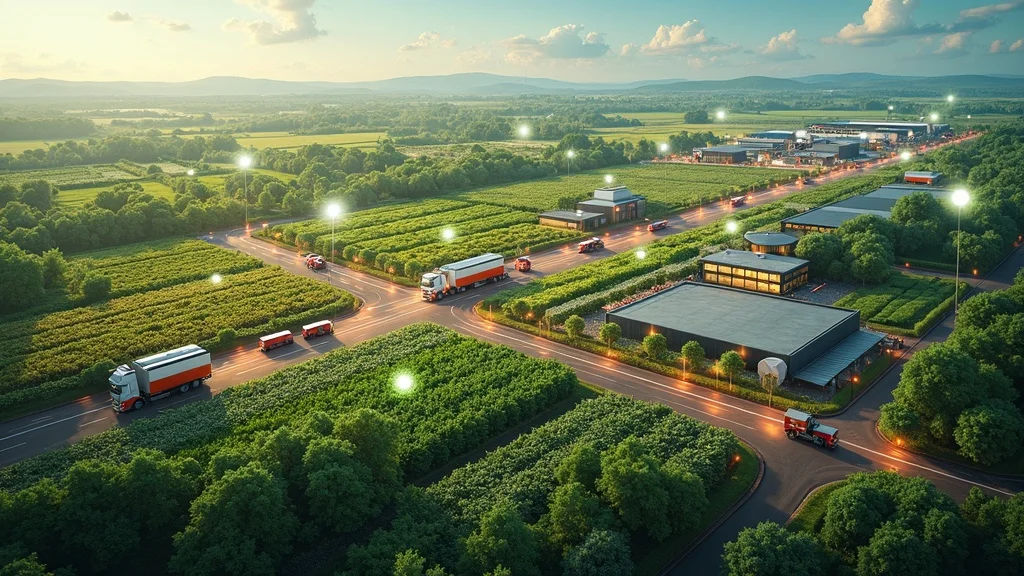
The blockchain agriculture supply chain concept is winning headlines, investor interest, and pilot programs for good reason. At its core, blockchain technology is being called on to solve age-old issues of food safety, fraud, and supply chain transparency. Industries worldwide are recognizing that secure, immutable data records could radically strengthen supply chain management. Blockchain’s transparency and traceability make it well-suited for agriculture, where understanding every stop—from seed to supermarket—can mean the difference between product quality and product recall.
The recent surge in food safety incidents and the rapid globalization of the food supply chain have underscored the need for technologies that offer more than a traditional approach. Here, blockchain promises a trusted distributed ledger system that all agricultural supply chain participants—from farmers and transporters to retailers—can access and update in real-time. Enthusiasts believe this leap forward could not only cut food waste, but also assure consumers of a reliable source for the food they eat by tracking product status at every stage. Yet, as more businesses invest in these solutions, questions grow louder: Is the advantage of blockchain technology in agriculture truly as revolutionary as touted?
What You’ll Learn About Blockchain Agriculture Supply Chain
- Key concepts in blockchain technology, food supply chain applications, and real-world challenges
- How supply chain transparency and smart contract adoption change agricultural supply chains
- The difference between hype and proven benefits in blockchain for agricultural supply chains

Defining Blockchain Technology in Agriculture
Understanding Blockchain Technology and Chain Technology Foundations
Blockchain technology is a decentralized digital ledger system that records transactions in a way that’s tamper-proof and transparent. Originating as the core innovation behind cryptocurrencies like Bitcoin, blockchain’s potential has since expanded into fields as diverse as healthcare, finance, and now, agriculture. In essence, each transaction or activity in a food supply chain is captured in a digital “block. ” These blocks link to form an unchangeable “chain,” accessible to every authorized member of the supply chain ecosystem. This system ensures that everyone, from agricultural producers to retailers, can trust the data they see because there’s no single point of ownership or alteration—only consensus-driven updates stored on distributed ledger technology.
The chain technology backbone strengthens agricultural supply chains by providing detailed, real-time data on every phase that agricultural products undergo. In practical terms, this allows for enhanced product quality checks, verifiable certifications (like organic or fair trade), and more robust responses in case of product recalls. Blockchain’s integration in agricultural supply is not merely a theoretical upgrade—it offers vital improvements over legacy software by embedding transparency and accountability at the heart of the chain management process. For food and agricultural industries especially vulnerable to fraud and spoilage, these features help close the “trust gap” between suppliers, retailers, and ultimately, consumers seeking a reliable source for what appears on their table.
How Blockchain Agriculture Supply Chain Solutions Work
In a blockchain agriculture supply chain implementation, each supply chain participant records their actions—planting, harvesting, shipping, processing, storing, or selling—directly onto a shared blockchain platform. This creates an indisputable audit trail covering every stage, from the agricultural supply at the farm to product status in distribution. For instance, when a batch of tomatoes is harvested, its journey (via refrigerated trucks, warehouses, grocery stores) is logged and time-stamped. If a shipment encounters a delay or a contamination event, blockchain helps instantly pinpoint origins, reduce investigation time, and minimize food waste. This is a marked departure from the traditional approach, where fragmented records and paper trails lead to inefficiency and gaps in quality assurance.
Several food supply chains now overlay blockchain technology with smart contract automation—coded protocols that trigger payments, quality checks, or insurance payouts based on verified data entries. Not only does this automate trust among stakeholders, but it can also enhance efficiency across global supply networks. Collectively, these innovations aim to give the agricultural industry a competitive edge in transparency, product tracking, and rapid response mechanisms.
“Blockchain technology enables tamper-proof traceability in the agricultural supply chain, bridging the trust gap among stakeholders.” — Industry Expert
The Current State of the Food Supply Chain
Challenges Facing Food Supply Chains
- Examples: food safety outbreaks, fraud, quality degradation
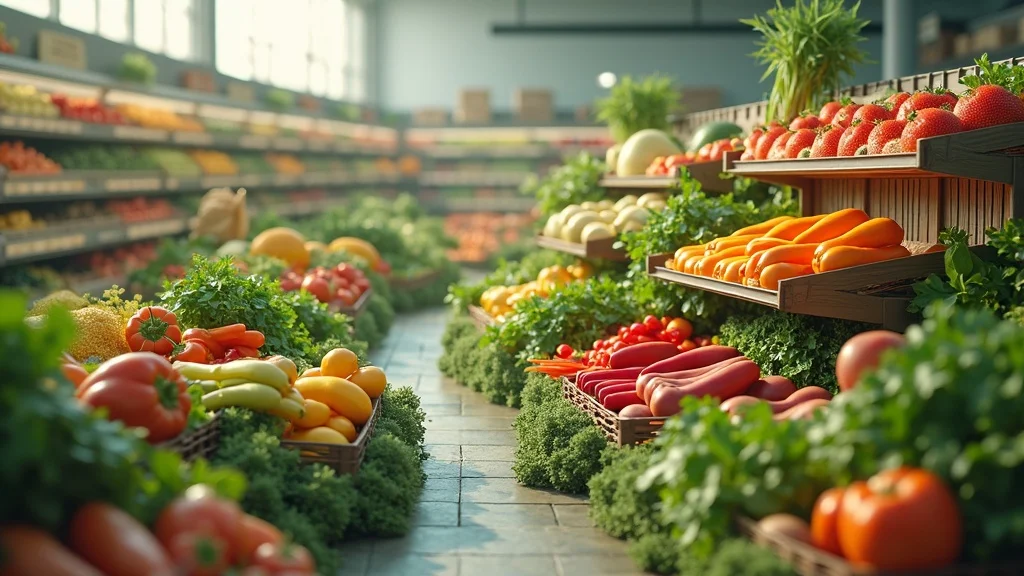
Despite years of technological advances, the food supply chain faces persistent issues: periodic food safety outbreaks, rampant fraud with mislabeling or product tampering, and quality degradation due to improper storage and handling. Many modern supply chains are complex webs of interdependent organizations, making it difficult to maintain full visibility or catch errors before they impact the end consumer. The stakes are enormous—foods that aren’t properly tracked or managed threaten public health and contribute to excessive food waste.
Fraudulent practices—including counterfeiting of organic labels, mixing of inferior products, and supply chain opacity—cost producers and retailers billions. The chain management required for such complex agricultural supply chains is frequently undermined by siloed data, slow verification processes, and limited access to real-time information. Existing accountability measures, relying on paperwork or non-digitized systems, often fail when rapid responses are needed, especially amidst food safety recalls or contamination scares. These pain points create fertile ground for new solutions such as blockchain in the agriculture and food supply chain sector.
Where Blockchain in the Agriculture and Food Supply Chain Fits
So, where does the blockchain agriculture supply chain offering slot into this landscape? Blockchain addresses many points of friction by giving every stakeholder—from smallholder farmers to multinational retailers—equal access to synchronized, immutable records. This consistent ledger allows for instant validation of food origin, handling conditions, and transfer custody all the way to the supermarket shelf.
With blockchain in agriculture, it becomes possible to rapidly trace potential points of contamination or fraud, minimizing recall scope and cost. Furthermore, blockchain introduces the concept of distributed ledger technology, meaning every party is both a data contributor and verifier. This model increases confidence in supply chain data, opening new possibilities in regulatory compliance, fair trade verification, and global supply chain management improvement.

Blockchain in the Agriculture Supply Chain: Promises vs. Reality
Hyped Benefits of Blockchain Agriculture Supply Chain
- Transparency, efficiency, reduced fraud, sustainability
The primary advantage of blockchain technology heralded by proponents is its potential for unparalleled transparency and traceability. With every transaction visible and verifiable by all participants, fraudulent activities become easier to spot and root out. This transparency also boosts overall efficiency—eliminating redundant paperwork and reducing the risk of human error. Smart contracts further automate critical supply chain management activities, such as instant payments or insurance claims following crop losses, minimizing bottlenecks throughout the agricultural supply chain.
Sustainability claims are also in the spotlight. Blockchain’s ability to pinpoint food waste hotspots, document sustainable farming practices, and certify fair trade via immutable records could transform compliance and ethical sourcing in the agricultural industry. Stakeholders argue this is more than incremental progress; it’s a paradigm shift, ready to empower even small agricultural supply players with tools that were previously reserved for industry giants.
Practical Limitations: Is Blockchain Really Solving Food Supply Challenges?
Yet, beneath the glossy surface, practical limitations remain. Even the most sophisticated chain technology cannot guarantee data accuracy if incorrect or fraudulent data is entered at the source. Human error in data entry, technology adoption barriers, and the fragmented nature of global supply chains can undermine blockchain’s effectiveness. For smallholders, the costs and skills needed to integrate blockchain with everyday farm activities are significant hurdles, especially in resource-limited regions.
Additionally, some benefits can be overhyped. For instance, blockchain’s much-touted security depends on a strong digital infrastructure and rigorous standards across all stakeholders. If only part of the chain ecosystem adopts blockchain or fails to integrate their back-end systems, the distributed ledger loses much of its power. As with any cutting-edge innovation, separating hype from reality requires more case studies, practical industry buy-in, and honest conversations about what blockchain can (and cannot) do for agricultural supply chains today.
Case Study Table: Real-World Blockchain Food Supply Chain Initiatives
| Project | Technology Used | Impact on Transparency | Impact on Efficiency |
|---|---|---|---|
| IBM Food Trust | Hyperledger-based Blockchain, Smart Contract | Full end-to-end traceability for leafy greens, reduces investigation time for food safety incidents to seconds | Automates recall procedures, simplifies auditing, and speeds supplier payments |
| Provenance | Ethereum Blockchain, QR Code Integration | Product origins and fair trade status transparent to consumers via QR code scan at points of sale | Reduces manual verification time, increases consumer trust and engagement |
| Bumble Bee Foods | SAP Blockchain Platform, Smart Contracts | Traceability from ocean to store shelf for tuna, verified by distributed ledger technology | Improves inventory accuracy, automates quality assurance audits |

Smart Contracts and the Digital Transformation of the Agricultural Supply Chain
What Are Smart Contracts in a Food Supply Chain Context?
Smart contracts refer to self-executing agreements stored on a blockchain and programmed to complete transactions when specific conditions are met. Within the food supply chain, they replace the need for third-party oversight, automating routine but vital processes such as release of payment upon product delivery, insurance payouts triggered by crop monitoring IoT, or automatic certification updates according to quality assurance guidelines.
This automation unlocks a new level of transparency and trust; once coded and initiated, smart contracts reduce the potential for disputes, miscommunication, and unexpected delays. Instead of chasing suppliers or finance departments for status updates, stakeholders can see—instantly and irrefutably—when contractual obligations have been fulfilled in the agricultural supply chain.
How Smart Contract Automation Can Improve Agricultural Supply Chains
Imagine a scenario where a shipment of organic avocados triggers a smart contract payment the instant sensors verify storage temperature and transit times were optimal throughout the journey. This not only ensures product quality but also enhances efficiency, as verified data on the blockchain acts as the final word in any transaction dispute. Smart contracts simplify compliance reporting for supply chain management, allow for fair pricing, and reduce the risk of payment delays that otherwise disrupt operations—especially for smaller producers needing prompt cashflow.
However, real-world implementation remains patchy. Legacy systems in agriculture are notoriously slow to adopt digital transformation, and misaligned digital skills, interoperability issues, or regulatory uncertainties often get in the way. For smart contracts to deliver on their promise, sectors must agree on standards and improve interconnectivity across diverse supply chain ecosystems.
“Smart contracts have the potential to automate trust yet face hurdles in legacy agricultural supply systems.”

Using QR Code Technology for Transparent Food Supply Chains
Real-Life Example: QR Codes Tracing Agricultural Produce
- Step-by-step: From farm to table tracking in agricultural supply chain ecosystems
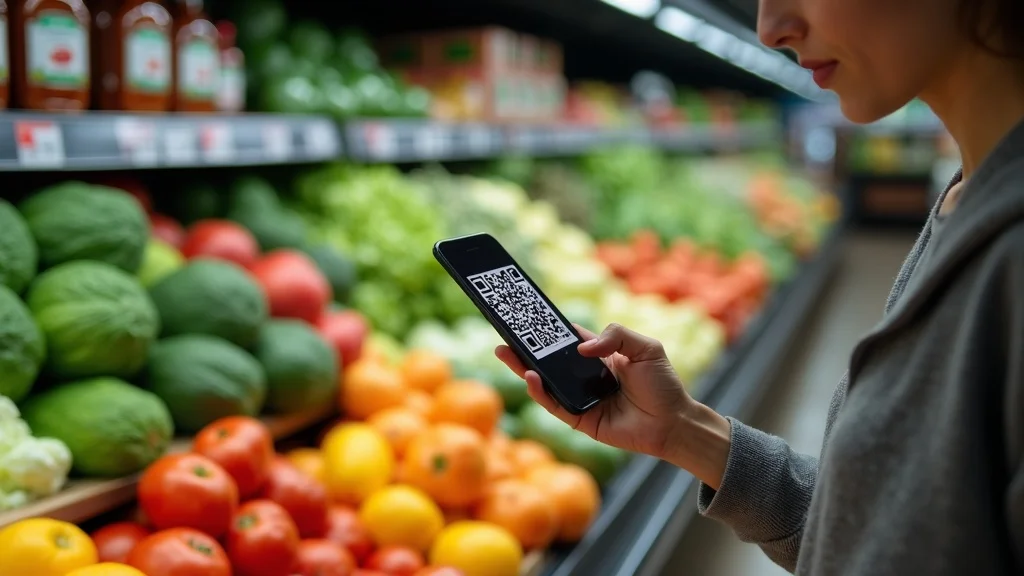
QR code technology serves as an accessible on-ramp for blockchain adoption in the food supply chain. Here’s how it works: as produce is harvested, a unique QR code is generated and attached to the batch. This code is updated at every key stage—processing, shipping, receiving, and retail. When shoppers scan the QR code at the supermarket, they gain instant access to the crop’s entire journey, including the date it was picked, temperature records throughout transport, and farming practice verifications recorded on a distributed ledger.
This approach helps consumers confidently select food from a reliable source, supports brands seeking to differentiate through transparency, and offers a practical solution suited to both sprawling markets and smallholder agricultural supply chains. By connecting physical goods to immutable digital records, QR codes make blockchain-powered traceability tangible for the average consumer, boosting accountability throughout the food supply chain system.
Limitations of QR Codes Versus Full Blockchain Implementation
However, while QR code systems offer a simplified gateway to transparency, they’re not a complete substitute for full-scale blockchain technology. QR codes typically only provide visibility for consumers and often depend on back-end systems that might not be immutable or universally trusted. If an upstream supply chain participant enters fraudulent or incomplete information, the entire data string can be compromised, even though it remains easily accessible on the label. In contrast, a blockchain agriculture supply chain locks every step into a distributed ledger, making manipulation or back-dating far less likely.
In short, QR codes greatly enhance efficiency and data access, but their effectiveness depends on the quality and fidelity of original data—and on whether they’re integrated as part of a more robust chain technology solution. For the full advantage of blockchain technology in the agricultural industry, scalable, interconnected, and fully auditable systems must support the simple consumer interface of the QR code.
Are Blockchain Agriculture Supply Chains a Global Solution or Niche Fix?
Supply Chain Scalability: Developing Countries Versus Developed Markets
The scalability of the blockchain agriculture supply chain varies dramatically between regions. In developed markets, where digital infrastructure and capital are abundant, large-scale agribusinesses can seamlessly integrate blockchain and smart contract technology to manage everything from crop input procurement to international shipping logistics. Here, the advantages of blockchain technology—such as instant recalls, product auditing, and automated regulatory compliance—can be quickly realized and scaled.
In contrast, developing countries face steeper barriers. Many smallholder farmers may lack access to smartphones, steady internet, or technical know-how required for distributed ledger technology adoption. Still, lightweight mobile blockchain platforms and SMS-based transaction verification are starting to close the gap, offering proof that these solutions aren’t just for the tech elite. Nonetheless, unequal access to technology, regulatory hurdles, and initial setup costs currently limit the global reach of blockchain in agriculture, keeping many transformative benefits out of reach for some of the very communities that might benefit most.
Issues with Data Entry and Human Error in Blockchain in the Agriculture
No matter how tamper-resistant a blockchain solution may be, the quality of its outcomes fundamentally depends on the data entered at each step. In supply chains as complex and human-driven as those in agriculture, mistakes or malicious intent during data entry can undermine the entire system. Incorrect information about crop origin, transport conditions, or product status can become “locked in” to the blockchain, perpetuating misinformation and diminishing the ledger’s value as a source of truth.
As blockchain use expands, the importance of robust data validation processes, training, and even connected automation (think IoT sensors, automated temperature monitoring) becomes increasingly apparent. Only with these checks can blockchain’s promise for agricultural supply chains be realized—ensuring that digitized, distributed records genuinely reflect what happens in the physical world.
Role of Industry Standards in Widespread Blockchain Adoption
Widespread benefits from blockchain in agriculture demand shared industry standards and protocols. Without agreement on data formats, interoperability requirements, privacy frameworks, and regulatory benchmarks, blockchain ecosystems risk becoming siloed and ineffective. Standardization ensures that food and agricultural records are interoperable across borders and companies, reducing the administrative burden and opening the possibility for real-time, end-to-end supply chain management.
Organizations like GS1 and IBM are already leading standardization efforts, aiming to unify agricultural supply chains under common blockchain protocols. For blockchain in the agriculture and food supply chain to become more than a niche fix—and fulfill its potential as a global solution—collaboration among technology vendors, governments, and producers will be essential.
People Also Ask: Blockchain Agriculture Supply Chain FAQ
How secure is data in blockchain agriculture supply chains?
Answer: Data security in a blockchain agriculture supply chain is inherently strong, thanks to tamper-proof distributed ledger technology. Each transaction is cryptographically secured and validated across multiple nodes, making unauthorized changes nearly impossible. Still, data accuracy is reliant on proper entry at the source and robust procedural safeguards.
What is the main difference between blockchain and traditional supply chain tracking?
Answer: Unlike the traditional approach, which uses centralized databases or paper records, blockchain provides a decentralized, immutable ledger. This eliminates the risk of hidden tampering or unilateral updates and ensures that all parties have real-time, synchronized views of product status, origin, and handling in the supply chain.
Can blockchain technology reduce food waste in the food supply chain?
Answer: Yes, blockchain technology enables real-time monitoring and transparent tracking of produce through the food supply chain. This improves inventory management, speeds up response to spoilage or contamination, and can significantly decrease food waste by enabling faster recalls and targeted intervention in quality assurance processes.
How costly is blockchain adoption for small agricultural supply chain firms?
Answer: The cost of blockchain adoption depends on the solution provider, the scale of integration, and existing IT infrastructure. While initial setup can be significant for smaller firms, lightweight and subscription-based blockchain platforms are emerging, making adoption more affordable. Strategic partnerships and government programs may also reduce the entry barrier for smallholders.
Lists: Blockchain Agriculture Supply Chain Use Cases
- Blockchain for traceability in food supply chain
- Smart contracts for crop insurance in agricultural supply chains
- Agricultural cooperatives using blockchain technology for fair trade verification
Animated explainer introducing blockchain and its application in agricultural supply chains for a general audience, including visual metaphors, animated step-by-step tracking, and simplified blockchain representations.
FAQs on Blockchain Agriculture Supply Chain
How secure is data in blockchain agriculture supply chains?
Data in blockchain agriculture supply chains is considered very secure due to the nature of distributed ledger technology, where each transaction is cryptographically verified and stored across multiple computers. This makes unauthorized alterations virtually impossible, although the accuracy of data still relies on honest and accurate input at the initial point of record.
What is the main difference between blockchain and traditional supply chain tracking?
The main difference lies in transparency and tamper-resistance. Blockchain records are immutable and decentralized, meaning that no single party can alter the supply chain record after it is entered, while traditional tracking methods can be manipulated or lost due to system limitations or human error.
Can blockchain technology reduce food waste in the food supply chain?
Yes. By enabling real-time and transparent tracking of agricultural produce, blockchain can help identify inefficiencies, allow faster interventions, and reduce unnecessary food waste due to better monitoring and management of perishable goods.
How costly is blockchain adoption for small agricultural supply chain firms?
Costs can be significant at first, especially for small firms with limited digital infrastructure. However, newer blockchain technologies are becoming more accessible, and pilot programs or group initiatives (such as cooperatives) can reduce costs and provide the needed support for adoption.
Are smart contracts legally binding across the food supply chain globally?
The legal recognition of smart contracts varies by jurisdiction. Many countries are developing regulations to recognize their legality, but global enforceability requires alignment with regional and international contract law, which is still evolving.
Key Takeaways: Is Blockchain Agriculture Supply Chain More Than Hype?
- Blockchain technology offers transparency, but effectiveness depends on supply chain complexity and data fidelity
- Smart contracts promise efficiency but aren’t a universal fix for agricultural supply pitfalls
- Blockchain in the agriculture supply chain is an emerging tool—not a miracle solution
Ready to Future-Proof Your Food Supply Chain? Discover More About Blockchain Agriculture Supply Chain
Want to see how blockchain can transform your food supply chain? Stay ahead of the curve—explore whether blockchain agriculture supply chain solutions are the right fit for your operation and discover more about the latest innovations today.